
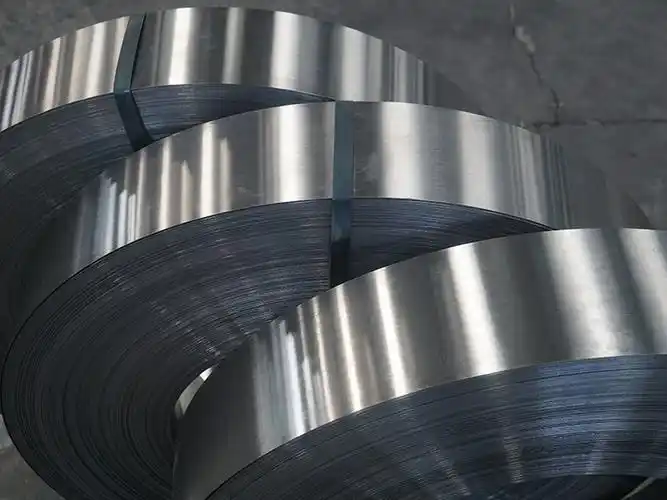
In modern automobile gearboxes and precision transmission systems, core components such as gears and synchronizer rings must not only withstand extreme alternating impact loads, but also guarantee long-term wear resistance and fatigue strength. Recently, we successfully secured a large-scale alloy steel strip inquiry for automotive gears: 20CrMnTi cold-rolled alloy steel strip, with a thickness of 1.5mm, a width of approximately 120mm, fully compliant with the GB/T 3077 standard, designated for precision transmission gears, synchronizer gear rings, and small differential components, with a total demand of 58 tons.
Facing this high-grade carburizing steel order, which demands extreme micron-level thickness control, grain size consistency, and surface decarburization limits, we delivered a high-standard, high-consistency precision narrow strip solution through our 20-high Sendzimir precision rolling mill and high-purity hydrogen-protected heat treatment technology.
1. Selecting the Classic Grade: The Strength and Toughness Code of Chromium-Manganese-Titanium Alloy
As the largest-volume and most classic carburizing steel grade in the domestic automotive gear industry (executing the GB/T 3077 standard), the compositional design of 20CrMnTi fundamentally endows components with superior impact resistance and extended wear life:
●Precise Alloy Ratio and Titanium Grain Refinement: Carbon content is strictly controlled between 0.17%–0.23%, with a scientific combination of chromium (1.00%–1.30%), manganese (0.80%–1.10%), and titanium (0.04%–0.10%). Notably, trace amounts of titanium effectively refine austenite grains, ensuring a stable grain size rating of ≥7, which fundamentally suppresses grain growth during heat treatment.
●Outstanding Mechanical Performance Indicators: Following standard carburizing, quenching, and low-temperature tempering, the material achieves an optimal combination of high surface hardness (HRC 58-62) and high core toughness (HRC 30-42). Its tensile strength is ≥1080MPa, yield strength is ≥850MPa, and elongation is ≥10%, effortlessly handling high-frequency, high-intensity alternating mechanical impacts.
●Typical Industrial Load-Bearing Applications: Backed by exceptional hardenability and fatigue resistance, it is widely utilized in automobile transmission gears, differential gears, synchronizer gear rings, drive shafts, and spline shafts within heavy-load transmission sectors.
2. Pushing Limit Tolerances: Micron-Level Thickness Control via the Sendzimir Mill
Stably rolling high-strength alloy steel strip down to an ultra-thin 1.5mm while meeting a strict tolerance window of ±0.01mm poses an extreme test of mill rigidity and strip shape regulation:
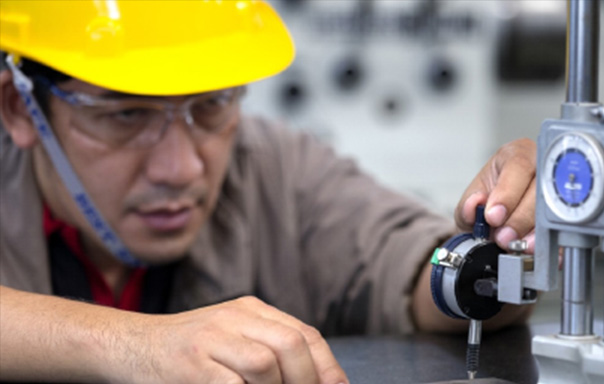
●Bypassing Conventional Thickness Precision: Leveraging our 20-high Sendzimir precision rolling mill, we tightly lock the thickness tolerance of the 1.5mm strip within ±0.005mm, far surpassing the customer's expected benchmarks.
●Superior Flatness and Surface Finish: Flatness is stably maintained at ≤3 I-units, and surface roughness is optimized to Ra≤0.4μm, paving the way smoothly for subsequent high-precision stamping and complex tooth profile machining.
3. Forging Quality Defenses: Full-Hydrogen Zero-Decarburization Annealing and Microstructure Deep Optimization
For carburized gear steels, surface decarburization or inconsistent microstructures during cold rolling and heat treatment directly lead to soft spots or premature spalling after quenching:
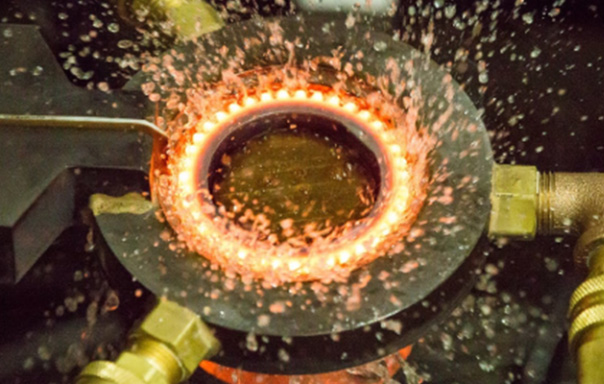
"Zero-Decarburization" Protection via Full-Hydrogen Bell Furnace: 20CrMnTi imposes extremely rigorous limits on decarburization layers (requiring ≤0.02mm). We utilize a 99.999% high-purity H2-protected full-hydrogen bell annealing furnace backed by advanced micro-tension control technology, ensuring that the strip surface remains free of decarburization and oxidation throughout the entire annealing cycle, fully satisfying pre-carburization surface quality standards.
Dual Deep Optimization of Metallography and Spherodization: To meet rigid index requirements for grain size and structure prior to carburizing, we scientifically optimize the spheroidizing annealing process and thermal curves to guarantee a carbide spherodization rate of ≥90% and hardness uniformity of ≤±5HV. This keeps micro-grains uniform and fine while ensuring exceptional material performance consistency during stamping and subsequent heat treatments.
From strict adherence to the GB/T 3077 standard and micron-level thickness control via the 20-high Sendzimir mill to the absolute protection of a decarburization-free surface via full-hydrogen annealing, we are leveraging a massive, stable capacity of 58 tons to continuously deliver solid, reliable metallic foundation materials for global automotive transmission and precision gear manufacturers!
Baoshan District,
Shanghai, China.