
In the rigorous landscape of modern automotive engineering and advanced component manufacturing, selecting the optimal strip steel goes far beyond generic standard designations. Overseas engineering and procurement directors are frequently challenged by materials that bridge the gap between standard carbon steels and high-alloy structural grades.
When an inquiry specifies a unique chemical blueprint—specifically featuring controlled Cr and Ni additions—it points directly to a specialized, high-performance alloy engineered for critical automotive systems such as precision transmission components, high-load gear mechanisms, and powertrain linkages.
Ⅰ. Chemical Composition & International Standard Mapping (The MTC Mandate)
To build absolute technical transparency and fulfill stringent global procurement standards, we reject isolated local designations (such as non-standard GB references) in favor of strict international equivalency and guaranteed elemental ranges.
For the specific custom grade in question, the guaranteed chemical composition is strictly controlled as follows:
Carbon (C): 0.32% – 0.40%
Manganese (Mn): 0.50% – 0.80%
Silicon (Si): 0.17% – 0.37%
Chromium (Cr): 0.10% – 0.25%
General Nickel (Ni): 0.10% – 0.25%
Phosphorus (P): Max 0.040% (optimized down to tighter mill limits upon request)
Sulfur (S): Max 0.040%
Metallurgical Function of Chromium (Cr) and Nickel (Ni) Additions:
1.Grain Refinement: The micro-alloying integration of controlled Chromium and Nickel effectively suppresses austenite grain growth during thermal processing, resulting in a fine, homogeneous microstructure essential for high-stress fatigue resistance.
2. Enhanced Hardenability: Unlike standard carbon steels, the precise balance of 0.10-0.25% Cr and 0.10-0.25% Ni guarantees superior through-hardenability , ensuring uniform mechanical performance from the surface to the core after quenching and tempering.
Ⅱ.State-of-the-Art Processing Infrastructure: From Raw Substrate to Precision Strip
Achieving tight dimensional tolerances and superior microstructural integrity on specialty alloy grades requires elite manufacturing assets. At Alloword Trading (Shanghai) / associated premier production bases, manufacturing excellence is anchored by heavy-duty, high-precision processing machinery:
●20-High Sendzimir Mills : Equipped with advanced Automatic Gauge Control (AGC) systems, ABB digital control architectures, and dual-cassette roll systems, our 20-high mills achieve exceptional thickness precision (down to ±0.002mm to ±0.01mm) and ultra-smooth surface finishes on narrow and medium high-carbon/alloy strips.
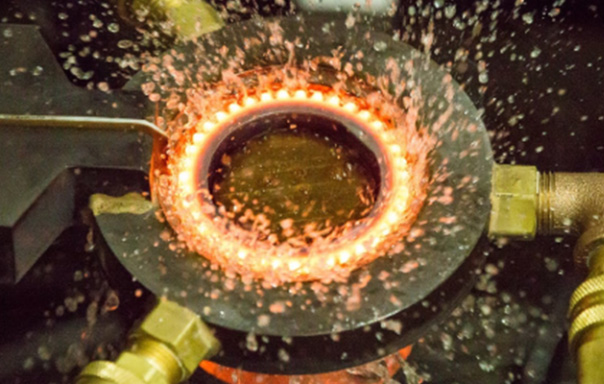
●Continuous Bright Annealing & Controlled Atmosphere Spheroidizing Furnaces: To optimize cold-forming behavior and eliminate internal stresses, our advanced annealing lines deliver precise thermal curves. For medium-to-high carbon and alloy steels, we guarantee a spheroidization rate of ≥95%, transforming blocky pearlite into uniform spheroidized structures, reducing intergranular oxidation to <5μm, and ensuring maximum elongation for complex deep-drawing operations.
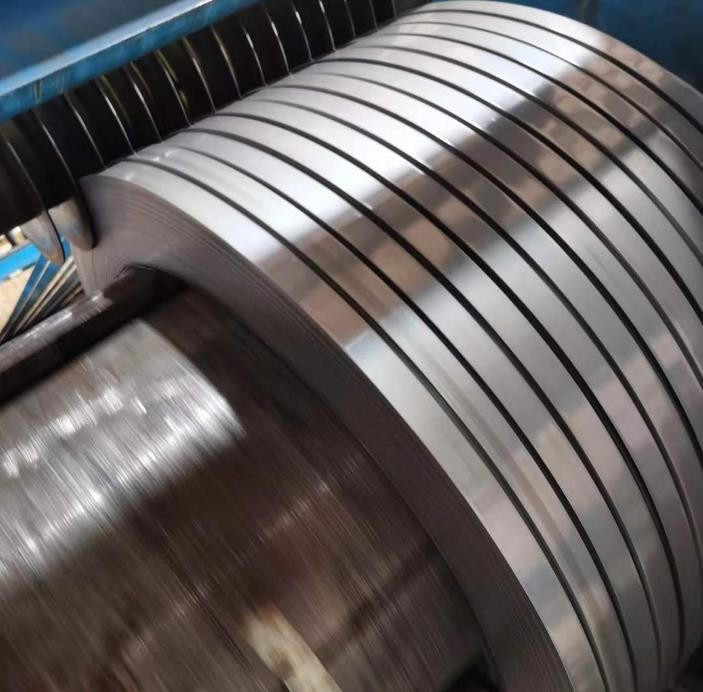
●Precision Slitting & Edge Control: Utilizing high-rigidity slitting lines with hydraulic lock-nuts, we eliminate burrs, control camber ≤0.3mm/m), and deliver burr-free edges tailored for high-speed automated stamping lines.
Ⅲ.Quality Assurance & Compliance
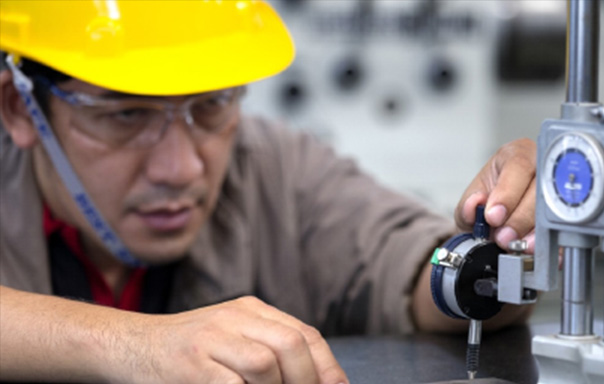
Every commercial batch is delivered with an authentic Mill Test Certificate (MTC) sourced from top-tier Chinese primary mills (such as Baosteel, Shagang, and WISCO standards), completely traceable and verified by third-party testing institutions (SGS/TUV) upon request. We ensure rigorous control over non-metallic inclusions, center segregation, and decarburization layers, providing overseas engineers with the data-driven confidence required for mission-critical automotive supply chains.
Baoshan District,
Shanghai, China.