
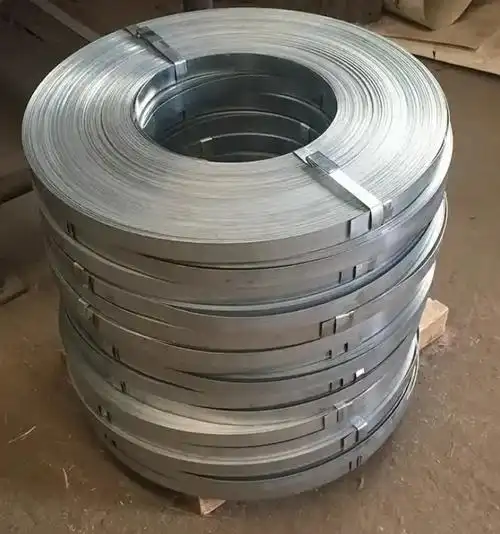
In the transmission and wear-resistant systems of heavy machinery, mining equipment, and engineering vehicles, core components must not only withstand massive alternating loads, but also possess exceptional wear resistance and hardenability. Recently, we received a precise inquiry for high-performance alloy structural steel: 50Mn2 cold-rolled alloy steel strip (plate), with a thickness of 2.5mm, a width of approximately 180mm, fully compliant with the GB/T 3077 standard, designated for manufacturing heavy-duty machine gears, wear-resistant structural parts, and high-strength shaft components.
Facing this alloy steel order, which demands strict strength-toughness matching, micron-level thickness control, and zero surface decarburization, we leveraged our 20-high Sendzimir precision rolling mill and 99.999% high-purity hydrogen-protected annealing technology to provide high-standard, high-consistency precision narrow strip solutions.
I. Material Gene Decryption: The Hardcore Strength of GB/T 3077 50Mn2 Medium-Carbon Manganese Alloy Steel
50Mn2 belongs to typical medium-carbon manganese alloy structural steel (executing the GB/T 3077 standard), with a composition and performance design engineered specifically for heavy-load operating conditions:
1.Golden Ratio of Carbon and Manganese: Carbon content is controlled between 0.47%–0.55%, providing high matrix hardness and strength; manganese content is as high as 1.40%–1.80%. The pronounced solid-solution strengthening effect produced by the manganese element enables the material to maintain good toughness while possessing exceptionally high hardenability and wear resistance.
2.Outstanding Mechanical Properties: After standard quenching and tempering, its tensile strength can reach over 980MPa, yield strength is ≥785MPa, and elongation is ≥9%, allowing it to effortlessly handle high-intensity, high-frequency mechanical impacts.
3.Typical Industrial Applications: Owing to its superior strength, toughness, and fatigue life, 50Mn2 is widely applied in heavy-duty machinery gears, wear-resistant liner plates, high-strength shafts, and connecting rod bolts, holding a mature and trusted position in mining machinery, construction equipment, and heavy-duty automotive sectors.
I. Precision Breakthrough: Sendzimir Rolling Mill and ±0.005mm Thickness Control
Stably rolling medium-carbon alloy steel down to a 2.5mm thickness while ensuring uniform thickness and superior strip shape is a formidable test of mill rigidity. Relying on our 20-high Sendzimir precision rolling mill, we achieved a major leap in precision capability:
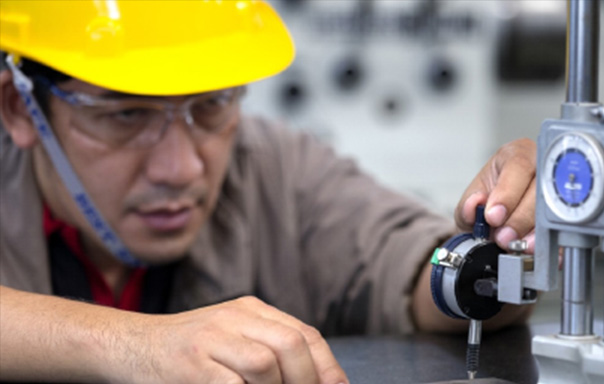
1.Micron-Level Thickness Control: We stably control the thickness accuracy of the 2.5mm strip within ±0.005mm, far surpassing conventional standards.
2.Top-Tier Strip Shape and Surface Finish: Flatness is stably maintained at ≤3 I-units, and surface roughness is optimized to Ra≤0.4μm, establishing a flawless baseline for subsequent high-precision stamping and heat treatment.
III. Core Process Safeguards: Zero-Decarburization Annealing and Overcoming High-Manganese Work Hardening
During cold rolling and heat treatment, alloy steel strips are most vulnerable to surface decarburization (which reduces hardness) and work hardening (which causes forming cracks):
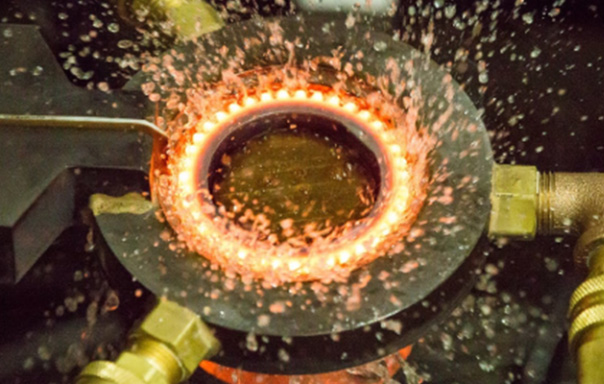
1.Zero-Decarburization Control via Full-Hydrogen Bell Furnace: 50Mn2 imposes extremely strict requirements on decarburization layer control (requiring ≤0.02mm). We employ a 99.999% high-purity H2-protected full-hydrogen bell annealing furnace coupled with advanced micro-tension control technology, ensuring that the strip surface is free of decarburization and oxidation during annealing, perfectly meeting the customer's surface quality and hardness requirements for subsequent direct quenching.
2.Overcoming High-Manganese Work Hardening: Due to its high manganese content, this steel grade exhibits a clear work-hardening tendency during cold rolling. By scientifically optimizing rolling passes and intermediate softening annealing processes, we ensure that the strip retains excellent subsequent stamping and forming performance upon reaching the target thickness of 2.5mm.
From precise benchmarking against the GB/T 3077 standard and micron-level thickness control via the 20-high Sendzimir mill to the rigorous protection of a decarburization-free surface via full-hydrogen annealing, we remain committed to delivering high-quality precision cold-rolled alloy steel strips that continuously empower heavy machinery and wear-resistant structural component manufacturing!
Baoshan District,
Shanghai, China.