
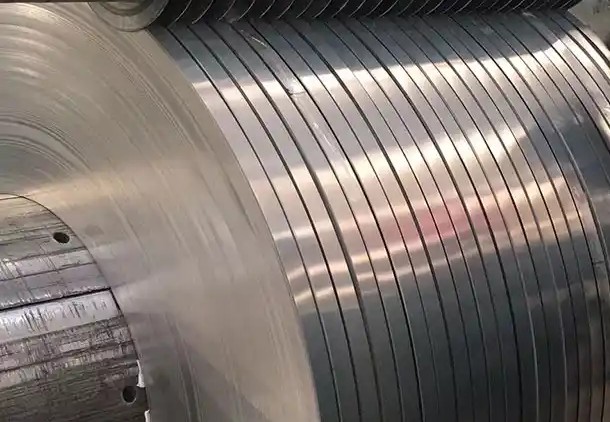
In harsh operating conditions characterized by strong acids, high chloride ions, and high temperatures and pressures, traditional austenitic stainless steels (such as 304 or 316L) often face severe challenges regarding insufficient pitting corrosion resistance or low strength. Recently, we received a high-end inquiry targeting extreme corrosive environments: 1.4462 (2205) duplex stainless steel strip, with a thickness of 1.5mm, a width of approximately 150mm, fully compliant with the EN 10088 standard, designated for chemical reactor linings and seawater treatment equipment components, with an order quantity of 20 tons.
Facing this duplex stainless steel order, which demands extremely high corrosion resistance, micron-level thickness control, and metallurgical phase balance, we delivered a manufacturing response meeting stringent industrial standards through our 20-high Sendzimir precision rolling mill and full-hydrogen bell annealing technology.
I. Material Gene Decryption: The Hardcore Strength of EN 10088 1.4462 (2205) Duplex Stainless Steel
1.4462 (internationally generalized grade 2205, chemical composition corresponding to UNS S32205 / EN X2CrNiMoN22-5-3) is one of the most widely applied standard duplex stainless steels:
1.Unique Duplex Microstructure: Composed of a balanced microstructure containing approximately 50% austenite and 50% ferrite, it perfectly combines the excellent toughness and corrosion resistance of austenitic stainless steel with the high strength and resistance to stress corrosion cracking of ferritic stainless steel.
2.Superior Strength Metrics: Its yield strength is ≥450MPa, and its tensile strength is ≥620MPa, achieving a mechanical load-bearing capacity more than twice that of conventional 304/316L stainless steel, effectively enabling reduced equipment wall thickness and structural weight.
3.Superior Corrosion Resistance and PRE Value: Its pitting resistance equivalent is PRE≥34, granting it outstanding resistance to pitting, crevice corrosion, and chloride stress corrosion cracking (SCC) in chloride-ion-rich environments (such as seawater, salt spray, and chemical brines). It serves as the premier choice for chemical reactor linings, seawater desalination equipment, flue gas desulfurization (FGD) systems, and pulp and paper machinery.
II. Precision Breakthrough: Sendzimir Rolling Mill and ±0.005mm Thickness Control
Due to the high strength and high deformation resistance of duplex stainless steel, rolling it precisely down to a 1.5mm thickness while keeping the thickness tolerance tightly controlled within ±0.02mm is an extreme test of mill rigidity and shape control. This highlights the core strengths of our 20-high Sendzimir precision rolling mill:
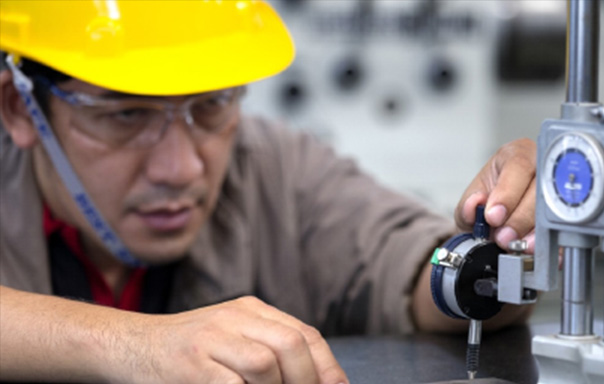
1.Micron-Level Thickness Accuracy: We can stably control the thickness accuracy of the 1.5mm strip within ±0.005mm, far surpassing the customer's strict tolerance expectations.
2.Top-Tier Strip Shape and Surface Quality: Flatness is stably maintained at ≤3 I-units, and surface roughness is optimized to Ra≤0.4μm, establishing a flawless foundation for seamless chemical equipment lining fabrication.
III. Core Process Safeguards: 50:50 Phase Ratio Stable Control and Intermediate Annealing Optimization
The core vitality of duplex stainless steel lies in the phase balance between its austenite and ferrite phases; any deviation can trigger a collapse in corrosion resistance:
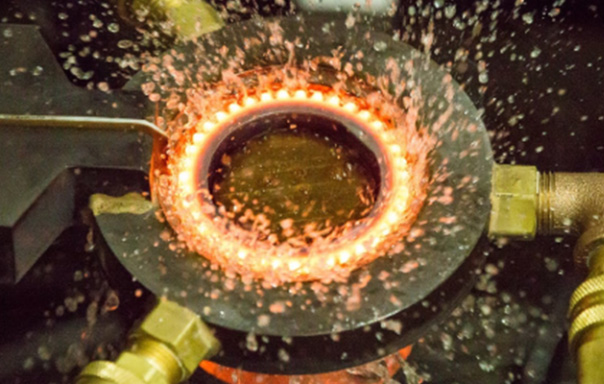
1.Precision Thermal Treatment via Full-Hydrogen Bell Annealing Furnace: Duplex stainless steel is extremely sensitive to phase ratio control. We employ a 99.999% high-purity H2-protected full-hydrogen bell annealing furnace, coupled with precisely tailored "temperature-time" annealing curves, to ensure that the austenite-to-ferrite phase ratio inside the strip remains perfectly stable at around 50:50, fundamentally eliminating corrosion resistance degradation caused by phase imbalance or harmful phase precipitation.
2.Overcoming Work Hardening and Balancing Formability: Because duplex steel exhibits a distinct work-hardening tendency during cold rolling, we scientifically optimize the rolling passes and intermediate softening annealing processes. This ensures that while achieving the target thickness of 1.5mm and high strength, the strip still retains exceptional subsequent forming performance for bending and stamping.
From the precise benchmarking against the EN 10088 standard and micron-level thickness control via the 20-high Sendzimir mill, to the phase balance safeguarded by full-hydrogen annealing, we continue to empower global chemical and seawater treatment equipment manufacturers with stable, high-efficiency 20-ton production runs!
Baoshan District,
Shanghai, China.