
1. Introduction: The Critical Role of Hardenability in Torsional Component Reliability
In the heavy-duty automotive and commercial vehicle powertrain sectors, the structural integrity of driveline components—such as drive shafts, universal joints, and gear mechanism inputs—dictates global product reliability. The metallurgy of choice for these highly stressed alternating-torsion components is historically SCM435 chromium-molybdenum alloy steel, valued for its exceptional core toughness after proper hardening.
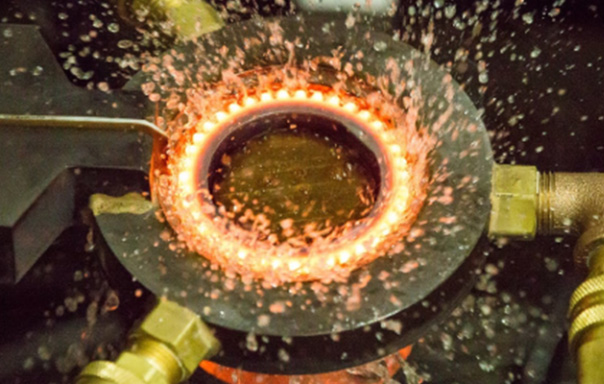
To achieve the balance of surface fatigue limits and core shear resistance, finished drive shafts typically undergo advanced heat treatment protocols, such as induction quenching followed by controlled tempering. However, Tier-1 automotive manufacturing plants frequently battle a severe structural bottleneck: high scrap rates and heat-to-heat variations caused by unpredictable end-quench hardenability tolerances, globally tracked as a wide Jominy Band.
When raw steel supplies exhibit erratic hardenability characteristics, standard automated workshop quenching setups fail. Eliminating these structural variations requires restricting chemistry window tolerances and managing the material’s grain refinement far beyond default global specifications.
2. Microstructural Analysis of Jominy Band Volatility and Structural Failures
End-quench hardenability evaluates a steel grade’s capacity to fully transform from high-temperature austenite into a structurally sound martensitic matrix across varying localized cooling rates. Standard material standard chemistry permissions allow for relatively wide chemistry ranges for critical alloy components, typically Carbon (0.33% - 0.38%), Manganese (0.60% - 0.90%), Chromium (0.90% - 1.20%), and Molybdenum (0.15% - 0.30%). While these transactional tolerances reduce melt shop operations costs at mass-commodity upstream mills, they introduce operational disruptions on downstream component processing lines.
When a specific metal batch trends heavily toward the upper boundary of these elemental limits, hardenability spikes. During automated induction quenching, the martensitic transformation front penetrates too deeply into the core of the shaft, yielding massive tensile residual stresses on the surface profile. This over-hardening matrix introduces supreme macro-brittleness, triggering micro-cracking during cold straightening or promoting hydrogen-induced delayed fracture under field preloads.
Conversely, when chemistry drifts toward the lower limit boundaries, overall hardenability drops. The localized cooling velocity at the drive shaft center cannot outrun the non-martensitic pearlite or bainite nose. The shaft center then fails to cross the necessary threshold of 90% martensite concentration, leaving a soft, ferritic-pearlitic structural core. Under dynamic alternating torsional loads, this sub-surface zone lacks the shear strength required to support the hardened outer case, causing rapid sub-surface fatigue cracking and delamination failure.
3. Metallurgical Interventions via Narrow Chemistry Window Control
ALLOWORD eliminates this heat treatment risk by enforcing a strict Narrow Chemistry Window Control (NCWC) methodology. Rather than processing commodity steel with wild alloying deviations, ALLOWORD narrows internal elemental melting windows to a highly stable target band. For instance, while typical international standards accept a wide Chromium range from 0.90% to 1.20%, ALLOWORD restricts this tolerance to a rigid window of 1.00% to 1.10%, representing a narrow 1/3 fraction of traditional margins.
By constraining the elemental deviation of Chromium (Cr) to ±0.05% and Molybdenum (Mo) to ±0.03%, the incubation time required for pearlite transformation remains constant. This fine control ensures that the resulting hardness value at the critical J9 parameter (9mm from the water-quenched tip) varies by less than ±3HRC, giving heat treat managers flawless batch-to-batch predictability.
Furthermore, grain size volatility between production heats can easily distort hardenability behavior. ALLOWORD’s SCM435 metallurgical platform utilizes strategic micro-alloying additions of Aluminum (Al) and Titanium (Ti) to precipitate a highly dense, fine distribution of AlN and TiC grain-pinning agents. These high-temperature compounds physically arrest prior austenite grain boundary migration during furnace heating (850~880℃), maintaining a hyper-refined grain architecture of ASTM 8 or finer for fully predictable transformation kinetics.
4. Mitigating Banded Segregation for Dynamic Fatigue Performance
In non-optimized raw material processing, element accumulation—particularly of Manganese and trace elements—causes macro-segregation during continuous casting solidify tracks. This manifests in hot-rolled bars as distinct, alternating pearlite/ferrite bands known as banded segregation. Under operating torsion, these chemical boundaries create high elastic-modulus mismatches, functioning as internal stress raisers that propagate longitudinal centerline shearing.
To counter this defect, ALLOWORD enforces severe continuous casting protocols utilizing advanced Electro-Magnetic Stirring (EMS) arrays, coupled with a prolonged high-temperature soaking and diffusion annealing phase exceeding 1150℃ during blooming mill reduction.
This metallurgical thermal processing successfully breaks down local chemical gradients, driving the material’s banded segregation rating down to a negligible index of ≤1 grade. The post-quenched microstructure presents an isotropic, ultra-homogeneous tempered martensite matrix capable of distributing alternating mechanical stress uniformly, extending the drive shaft’s dynamic torsional fatigue life by up to 40%.
5. Conclusion: Engineered Procurement Control via ALLOWORD
Securing global automotive component manufacturing chains demands raw material with unyielding microstructural predictability. Hardenability deviations between material heats undermine factory production automation, increasing mechanical scrap rates and field risk.
ALLOWORD delivers fully verified, controlled hardenability (H-steel class) SCM435 hot-rolled bars and wire rods engineered for high-performance automotive powertrain applications. Our integrated quality supply chains maintain severe inclusion cleanliness profiles (O≤10ppm) and tight Jominy band bounds. Every delivery is fully certified to EN 10204 3.1 standards, detailing verified end-quench test curves and full ultrasonic testing (UT) data to ensure total structural compliance with international standards.
Baoshan District,
Shanghai, China.