
In the engineering design of high-efficiency traction motors, compressors, and industrial alternators, the magnetic and mechanical consistency of the stator and rotor core laminations dictates total system efficiency. Cold-Rolled Non-Oriented (CRNGO) electrical steel is the foundational material for these rotating machines, where the magnetic field rotates multidirectionally within the plane of the sheet.
Among the global standardized grades running on high-speed automated lamination lines, B50A470 (compliant with IEC 60404-8-4 and JIS G3108 frameworks) represents a critical baseline grade. Optimizing its performance requires strict control over the microstructural variables that govern magnetic permeability and core losses under continuous alternating cycles.
1. Decoding the Alphanumeric Engineering Parameters of B50A470
For international tier-suppliers and motor procurement engineers, the designation code conveys precise metallurgical and physical boundaries rather than commercial descriptors:
"B": Establishes the source mill compliance profiling (e.g., Baosteel primary automotive-grade production).
"50": Represents 100 times the nominal thickness of the sheet metal, denoting a fixed profile of 0.50mm. This gauge provides a calculated balance between mechanical rigidity during high-tonnage progressive die punching and the restriction of eddy current pathways.
"A": Expressly designates a Non-Oriented recrystallized grain structure, meaning the magnetic properties exhibit planar isotropy (uniformity across all angles relative to the rolling direction).
"470": Represents 100 times the maximum guaranteed core loss value . This ensures that the total iron loss does not exceed 4.70 W/kg when subjected to a 1.5Tesla magnetic flux density at an alternating frequency of 50Hz.
2. Microstructural Engineering: Silicon Solutes and Grain Size Control
The core loss of B50A470 is dynamically decoupled into three separate physical phenomena: hysteresis loss (energy friction from magnetic domains flipping), classical eddy current loss (circulating electrical currents within the sheet), and anomalous/excess loss. ALLOWORD optimizes these parameters through rigorous control of the underlying metallurgy:
Suppressing Eddy Currents via Solid-Solution ResistivityEddy current loss is directly dependent on the square of the sheet thickness and the frequency of operation, but it can be effectively suppressed by increasing the electrical resistance of the material matrix itself.
In B50A470, the matrix resistivity is maximized by alloying between 1.5% and 2.5% Silicon , supplemented with trace additions of Aluminum (Al). The Si and Al atoms distort the iron ferrite lattice, increasing internal electrical resistance without deteriorating the essential saturation polarization. This metallurgical configuration successfully confines local eddy currents within the 0.50mm boundary layer, preventing inter-lamination power loss.
Stabilizing the Hysteresis Loop via Domain Growth Control
Hysteresis loss represents the energy dissipated as heat when the magnetic domains change alignment during each electrical cycle. This loss is heavily dependent on grain boundary density and internal micro-stresses.
ALLOWORD’s B50A470 undergoes specialized continuous annealing line (CAL) processing to achieve an optimized mean grain diameter of 80μm to 120μm. This precise grain size strikes a strategic compromise: it minimizes the grain boundary pinning of domain walls (reducing hysteresis), while preventing excessive grain coarsening that would otherwise accelerate anomalous eddy current losses.
3. Progressive Punching and Interlaminar Insulation Parameters
The transformation of B50A470 from cold-rolled slit strips into final stator/rotor lamination stacks introduces severe mechanical stress that can degrade magnetic performance if unmanaged:
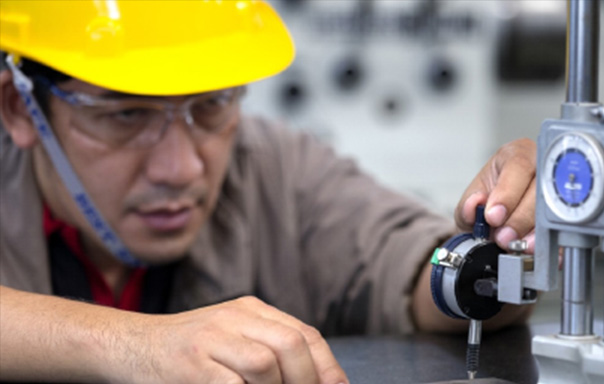
Burr Height Management (≤0.02mm): B50A470 is delivered with a micro-thin, high-resistance inorganic-organic composite insulation coating (such as C-5 or T4 classification). During high-speed progressive punching on laminating presses, the slitting and punching clearance must be monitored to keep edge burrs strictly under 0.02mm. Exceeding this limit creates metallic bridges between adjacent laminations, short-circuiting the insulation layer and causing severe localized eddy current heating (thermal hotspots).
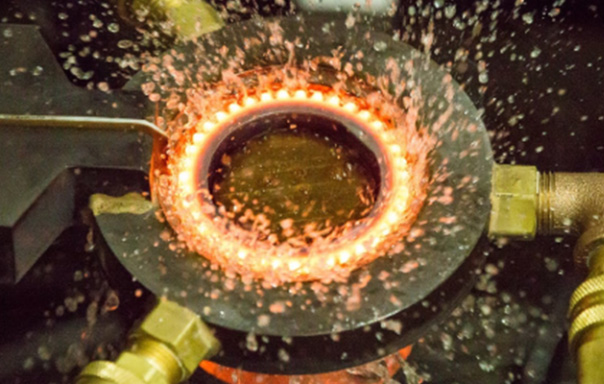
Stress-Induced Degradation and Recovery: Shearing stresses introduce a high density of dislocations at the cut edges, pinning magnetic domain walls and locally increasing core loss near the punched margins. For high-efficiency or high-frequency traction applications, the stamped laminations must undergo Stress-Relief Annealing (SRA) at approximately 750to 780℃ in a neutral, non-oxidizing atmosphere to restore the original soft magnetic parameters.
Conclusion: Traceable Global Supply of Certified Soft Magnetic Coils
Engineering ultra-efficient magnetic circuits requires raw material supply with unyielding microstructural discipline. Inconsistency in grain size distribution or variations in the thickness profile across a single coil will manifest as unpredictable motor efficiency and torque ripple on the assembly line.
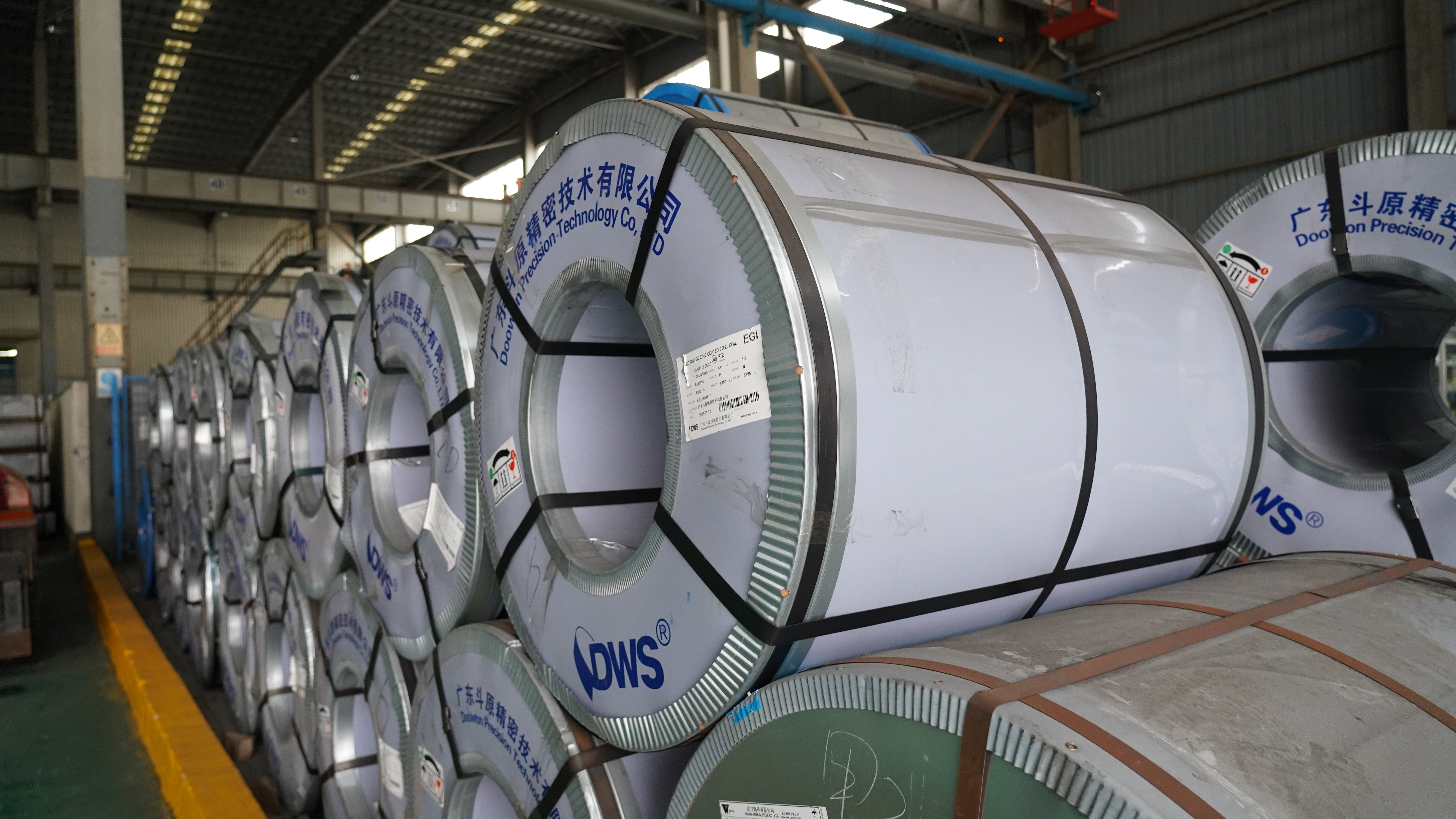
As a strategic supply partner to international traction motor manufacturers and power component Tier-1 networks, ALLOWORD manages consistent allocations of prime CRNGO B50A470 and 50A470 electrical steel coils and precision slit strips. Our processing facilities enforce a strict non-metallic inclusion rating (S, N, O, C≤0.005%) and provide fully verified EN 10204 3.1 Mill Test Certificates (MTCs) mapping exact hysteresis loops and guaranteed excitation curves.
Technical Specification Sheets & RFQ Inquiry:ALLOWORD’s Electrical Steel Products Division provides complete magnetic induction curves (B2500/B5000), lamination factor documentation, and custom width slitting configurations down to ±0.05mm. To review our grade comparison matrices or to request volume contract pricing for global export, visit the official ALLOWORD website or connect with our international technical sales engineers.
Baoshan District,
Shanghai, China.