
Thanks to its unique multi-phase microstructure characteristics, dual-phase steel boasts numerous prominent advantages in the automotive manufacturing sector. It can effectively meet the dual core demands of automotive lightweighting and safety, making it the preferred material to replace traditional steel.
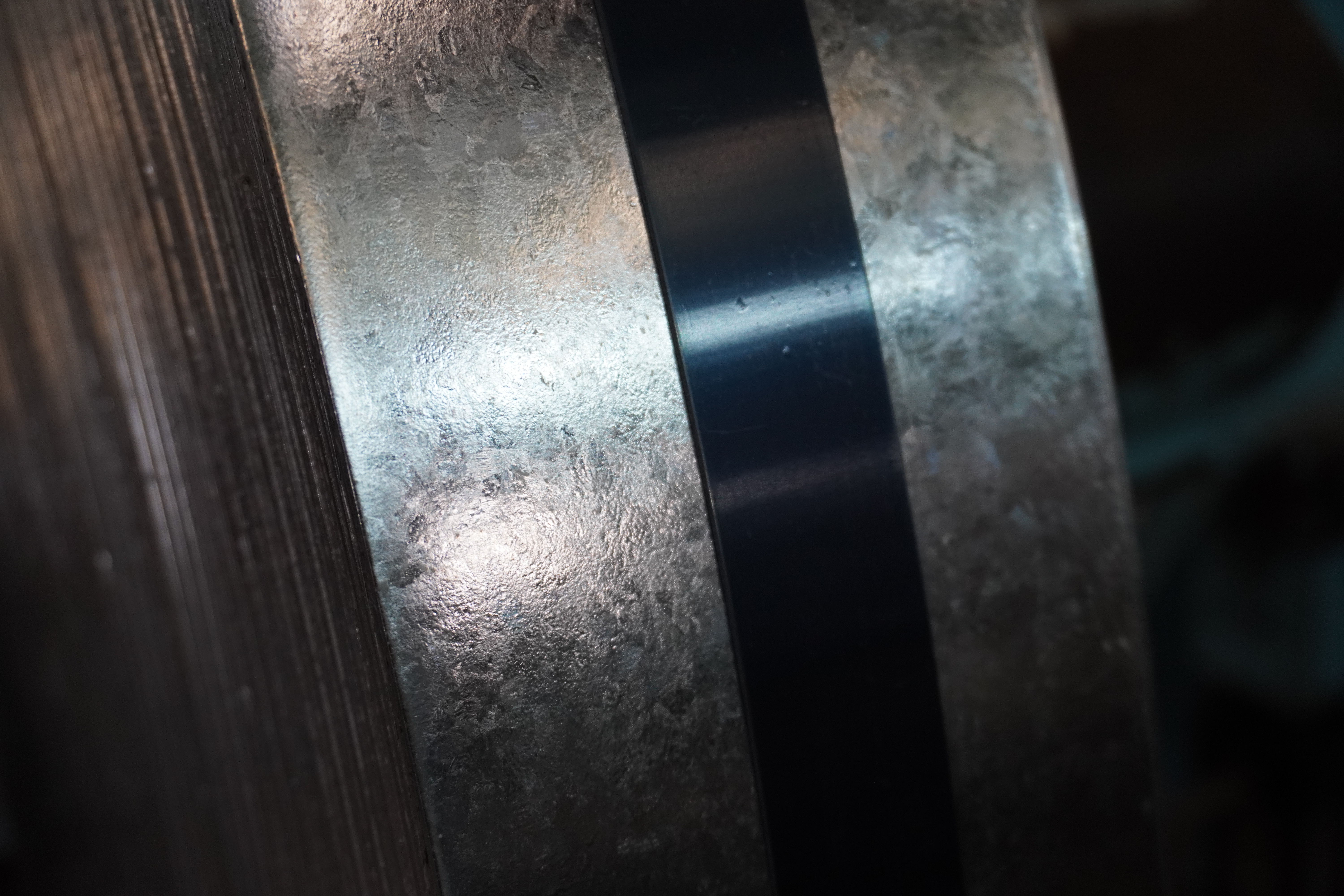
By combining multiple microstructures such as ferrite, bainite and martensite, dual-phase steel achieves a perfect balance between strength and toughness. It takes ferrite as the matrix to ensure toughness and uses bainite and martensite as the strengthening phases to improve overall strength, a feature that makes it suitable for manufacturing various key automotive components. Among them, the commonly used HD720/950CPD+Z hot-dip galvanized dual-phase steel adopts Baosteel's patented process, with a tensile strength of up to 1000MPa grade and an elongation of over 12%, striking a balance between high strength and excellent stamping formability. The skin-passed surface treatment further improves stamping precision and reduces part forming deviation, while the uniform hot-dip galvanized coating provides anti-corrosion protection for more than 10 years and extends the service life of automotive parts.
Dual-phase steel has outstanding advantages in application adaptability. It is mainly used for manufacturing core structural and safety parts of automobiles such as A/B pillar reinforcement plates, sill beams and anti-collision beams. In production, it can be flexibly subjected to rough processing such as slitting and levelling to cut into specified sizes; during stamping, the dimensional accuracy of parts can be guaranteed only by adjusting mold parameters. Its storage and distribution are also more convenient: the zinc coating oxidation can be avoided just by controlling the ambient humidity below 60%, and direct delivery to automotive factories is available, which reduces surface damage during transit and cuts production losses.

Baoshan District,
Shanghai, China.