
In the battle against metal corrosion, zinc is the primary shield. However, the method of application—Hot-Dip Galvanizing (HDG) or Electro-Galvanizing (EG)—dictates the product's lifespan, weldability, and surface aesthetics. This guide analyzes the metallurgical differences to help you choose the optimal substrate for your engineering needs.
I. Core Differences: Metallurgy and Performance
The choice between HDG and EG is a trade-off between Longevity and Precision.
1. Coating Thickness & Corrosion Resistance
Hot-Dip Galvanizing (HDG): Typically features a thick coating of 10 - 50 μm. Its core strength lies in the Metallurgical Bond; the zinc reacts with the steel to form a series of Zinc-Iron alloy layers. This provides "sacrificial protection" that can last $20-50$ years in outdoor environments.
Electro-Galvanizing (EG): Delivers a thin, uniform layer of 3 - 12 μm. Since it lacks the thick alloy layer, its corrosion resistance is significantly lower, making it suitable primarily for indoor or mild environments.
2. Surface Morphology & Aesthetics
HDG: The surface is slightly rough and may exhibit "Zinc Spangles" (Zinc Flowers). While less aesthetic, it is highly functional for structural steel.
EG: Offers a smooth, mirror-like finish with zero spangles. It is highly conductive and takes paint (powder coating) exceptionally well, making it the standard for consumer electronics and automotive panels.
3. Manufacturing Principles
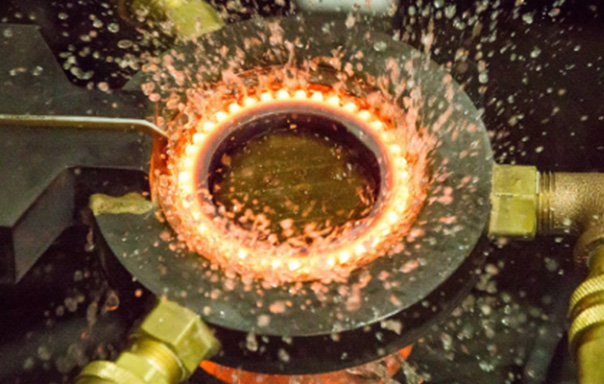
HDG (Thermal Process): Involves immersing the steel in a bath of molten zinc at approximately 450℃.
EG (Electrolytic Process): Uses an aqueous zinc salt solution and electrical current to deposit zinc ions onto the steel surface at room temperature.
II. Comparative Performance Matrix
| Feature (特性) | Hot-Dip Galvanizing (HDG) | Electro-Galvanizing (EG) |
| Bonding Type | Metallurgical (Alloy Layer) | Physical/Ionic Adhesion |
| Thickness Range | 10 - 100 μm | 3 - 15μm |
| Corrosion Resistance | Excellent (Outdoor/Marine) | Moderate (Indoor/Automotive) |
| Formability | Risk of coating flaking if bent | Excellent (Ideal for deep drawing) |
| Cost | Low (Mass production) | High (Complex processing) |
III. Identification: How to Tell Them Apart
1.Visual Inspection:
Look for "Spangles": Only HDG has visible zinc crystals.
Check for "Zinc Drips": HDG often has slight thickness variations or drips at the edges due to the dipping process. EG is perfectly uniform.
2.Color Hue:
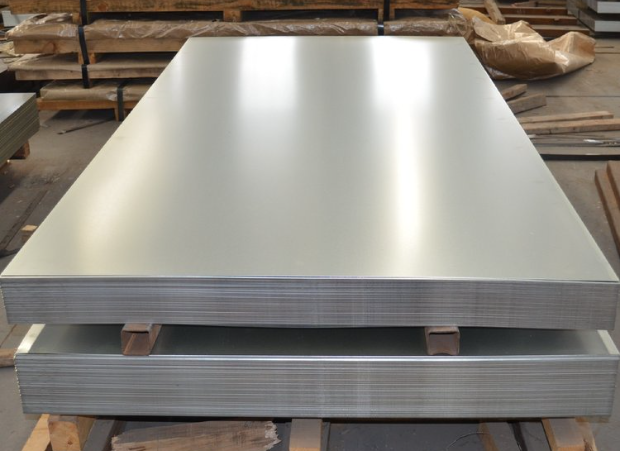
HDG is typically Bright Silver to Dull Grey.
EG can be customized via passivation to appear Blue-white, Iridescent (Yellow-Green), or Matte Silver.
IV. Strategic Application Scenarios
1. Choose Hot-Dip Galvanizing (HDG) for:
Infrastructure: Highway guardrails, power transmission towers, and bridge components.
Construction: Galvanized steel pipes (SGCC), structural beams, and outdoor HVAC supports.
Agriculture: Greenhouse frames and fencing.
2. Choose Electro-Galvanizing (EG) for:
Precision Electronics: Computer chassis, internal shielding cans, and switchgear.
Automotive Parts: Body panels and brackets requiring high-precision stamping (SECC/SECD).
Aesthetics: High-end interior hardware and furniture components.
V. Global Grade Cross-Reference
1. Hot-Dip Galvanizing (HDG)
Commercial Quality: SGCC, DX51D+Z, DC51D+Z
Drawing Quality: DX53D+Z, DC54D+Z (For complex automotive shapes)
Structural Quality: S250GD+Z, S350GD+Z
2. Electro-Galvanizing (EG)
Commercial (JIS/Standard): SECC (Substrate: SPCC), SECD (Stamping)
Specialty: SECC N2 (Fingerprint resistant), SECC-P (Phosphate treated for superior paint adhesion).
Baoshan District,
Shanghai, China.