
In modern automotive manufacturing and heavy-duty structural component sectors, the application of high-strength steel has become a core pillar for lightweight design and safety. Recently, we received a high-standard inquiry regarding S550MC pickled automotive steel coils: with a specification of 3.0mm thickness (with tolerance strictly controlled within ±0.05mm) × 1250mm width × coil (C), and the material must fully comply with BQB (Baosteel) enterprise standards.
Faced with this demand for automotive steel that balances high strength with ultra-narrow thickness tolerances, conventional hot-rolled pickled coils often face challenges in dimensional stability and edge quality. Through compositional code decryption and advanced mill-finishing processes, we have perfectly resolved this industry pain point.
I. Automotive Steel Genes: Microalloyed Composition Design of S550MC
S550MC is a high-performance hot-rolled high-strength automotive structural steel, where the "550" in its core designation represents a minimum yield strength of 550 MPa.
●Low-Carbon and Microalloyed Synergy: This material adopts a rigorous chemical composition design featuring low carbon along with niobium (Nb) and titanium (Ti) microalloying.
●Strengthening and Toughening Mechanism: Through dispersed carbonitride particles formed by trace niobium and titanium elements during heating and rolling, austenitic grain growth is strongly inhibited. Concurrently, grains are refined during the phase transformation (combining precipitation strengthening and grain refinement strengthening), allowing the steel plate to achieve ultra-high yield and tensile strengths while retaining excellent cold-formability and weldability.
II. Industry Pain Points: Inherent Limitations of Traditional Pickled Coils
Despite their excellent chemical composition, conventionally manufactured S550MC hot-rolled pickled coils often expose two major technical bottlenecks when delivered directly for precision stamping or automotive component manufacturing:
1.Head-and-Tail Performance and Dimensional Flaws: Influenced by the characteristics of hot continuous rolling, temperature fields, and tension fluctuations, the head and tail sections of steel coils often exhibit non-uniform microstructures, thickness deviations, or minor surface flaws.
2.Pronounced Edge Drop: The edge thickness of conventional hot-rolled sheets is typically thinner than the center, failing to meet the rigorous demands of high-end automotive components for high-precision tolerances across the entire width.
III. Our Breakthrough Solution: Dual Safeguards of Head-Tail Cropping and Mill Finishing
To ensure the 3.0mm thickness is tightly locked within an ultra-narrow tolerance range of ±0.05mm, we implemented rigorous production line upgrades and quality control:
●Precise Head-Tail Cropping: During pre-production processing, pickled coils undergo strict laser thickness measurement and initial/trailing end cropping to completely eliminate unstable transition sections with abrupt thickness changes, ensuring that only dimensionally stable premium base material is delivered.
●Precision Mill Thickness Finishing: To address the issue of oversized tolerances in conventional pickled coils, we utilize dedicated, high-rigidity, high-precision mills for thickness-finishing processes. By applying secondary precision leveling and micro-reduction to the strip, we not only eliminate obvious edge-drop effects but further compress the thickness tolerance limit down to ±0.05mm, entirely rivaling the precision of cold-rolled sheets.
From strict compliance with Baosteel's BQB standards and the efficient empowerment of microalloyed compositions to the process innovation of "head-tail cropping + mill finishing," we are leveraging hardcore delivery capabilities to provide the automotive manufacturing industry with high-quality S550MC pickled steel solutions that exceed expectations.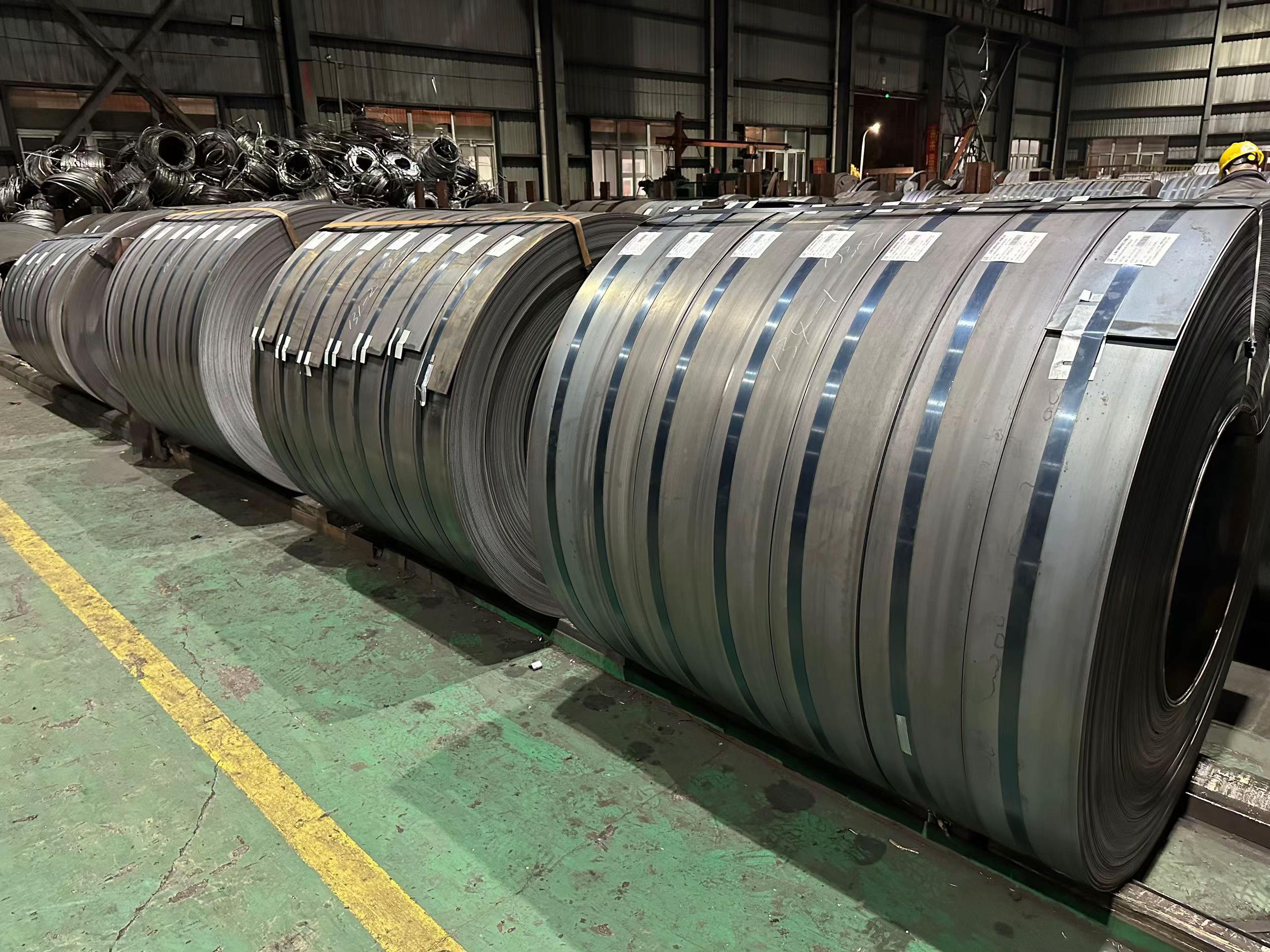
Baoshan District,
Shanghai, China.