
In automotive chassis and suspension systems, springs serve as core elastic energy-storage components, directly dictating ride comfort, handling stability, and fatigue life across the vehicle's entire lifecycle. When subjected to high alternating loads, frequent impacts, and complex service environments, material selection is critical.
Among numerous spring steel grades, the domestic classic 60Si2MnA (complying with GB/T 1222 and related standards) and the Japanese industrial standard-derived SUP7 (complying with JIS G4801) stand out as two prominent high-carbon silicon-manganese spring steels. While they share highly similar chemical compositions, they exhibit subtle differences in micro-metallurgy, hardenability, and high-end suspension applications. This article provides an in-depth performance comparison of these two materials from the dimensions of chemical composition, mechanical properties, and processing characteristics.
Ⅰ. Chemical Composition and Micro-Strengthening: The Fine-Tuning Art of Similar Genes
From an alloy system perspective, both 60Si2MnA and SUP7 belong to the silicon-manganese spring steel family, sharing a consistent primary strengthening mechanism:
High-Carbon Matrix and Carbide Strengthening: Both maintain a carbon content steady at around 0.56%–0.64%, ensuring the martensitic matrix required for high hardness and high elastic limits after quenching and tempering.
Silicon-Manganese Synergistic Alloying: The scientific ratio of silicon (1.50%–2.00%) and manganese (0.60%–0.90%) significantly increases the yield-to-tensile ratio, effectively suppresses the decomposition of tempered martensite during tempering, and delays softening.
Trace Elements and Metallurgical Purity: SUP7 enforces strict threshold limits on harmful impurities like sulfur and phosphorus within its JIS framework, while premium domestic 60Si2MnA achieves comparable excellence through advanced secondary refining technologies—minimizing total inclusion counts and large non-metallic inclusions to guarantee fatigue fracture resistance in high-stress suspension springs.
2. Mechanical Performance and Elastic Limits: A Peak Showdown
As suspension springs, materials must possess high yield strength and high elastic limits to resist permanent deformation:
Yield-to-Tensile Ratio and Tensile Strength: Following standard quenching and intermediate tempering, the tensile strength of both materials typically stabilizes at the 1200–1400 MPa tier, with yield-to-tensile ratios exceeding 0.85. This ensures exceptional elastic recovery under massive compressive or tensile deformations.
Fatigue Resistance and Dynamic Load Performance: Suspension springs endure millions of alternating cycles. 60Si2MnA utilizes its excellent hardenability to develop a uniform troostite or tempered troostite structure at the core, effectively resisting fatigue crack initiation. Meanwhile, SUP7 exhibits robust dynamic impact resistance under high-frequency, large-deformation operating conditions.
3. Process Adaptability: Heat Treatment, Decarburization Sensitivity, and Forming
Spring manufacturing tests not only material performance but also demands rigorous heat treatment processes and surface quality control:
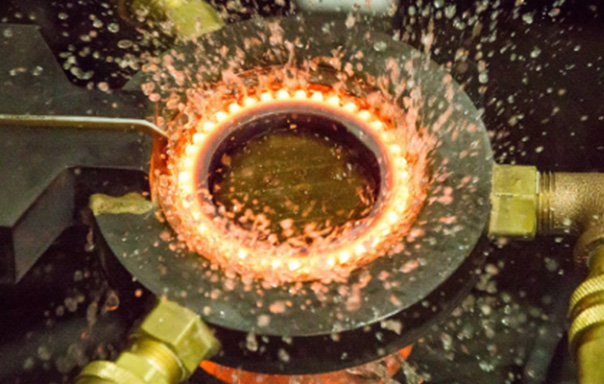
Decarburization Sensitivity Control: Silicon-manganese steels are inherently prone to surface decarburization, which reduces residual compressive stresses and severely degrades fatigue life. Both materials require strict atmospheric control inside heating furnaces (such as protective atmospheres or rapid induction heating) to ensure zero surface decarburization layers.
Hardenability and Distortion Control: 60Si2MnA features favorable hardenability, achieving deeper hardened layers during oil quenching. Similarly, SUP7 exhibits outstanding process stability across thermal forming and heat treatment windows, perfectly matching the continuous production demands of modern automated automotive spring lines.
Baoshan District,
Shanghai, China.