
In the modern automotive manufacturing industry, lightweight design and high safety are the core twin engines driving the technological upgrade of complete vehicles. As "critical safety components" directly related to occupant riding comfort and life safety, automotive seat adjustment mechanisms and door lock systems impose extremely strict requirements on the mechanical performance, dimensional accuracy, and stamping formability limits of the internal core structural parts.
As a brand focusing on the R&D and supply of high-end special metal materials, ALLOWORD relies on advanced production line equipment and a whole-process consistent quality system to provide high-performance high-strength steel solutions for global auto parts manufacturers. This article will deeply analyze the stamping formability, technical standards, and process key points of high-strength steel (represented by HC420LA and HC700LA) in automotive seat adjustment mechanisms and door lock system safety components.
I. Material Analysis and Core Technical Indicators
Automotive high-strength steels are mainly divided into bake hardening steel (BH), isotropic steel (IF), high-strength interstitial free steel, and high-strength low-alloy steel (LA, Low Alloy Steel) focused on in this article, according to their strengthening mechanisms.
1.1 Microstructure and Performance Characteristics of HC420LA and HC700LA
●HC420LA (Thermoformed/Cold-Formed High-Strength Steel): The yield strength is typically at the 420 MPa level, combining good plasticity and formability, and is widely used for structural parts subject to complex stress and requiring medium-depth stamping deformation.
●HC700LA: Belongs to the high-strength level (yield strength reaching the 700 MPa level). Its matrix microstructure is obtained through precipitation strengthening and grain refinement strengthening of micro-alloying elements (such as Nb, Ti, V), possessing extremely high tensile strength and fatigue resistance.
According to ALLOWORD's production and supply standards, the typical technical indices of high-strength steel and related cold-formed structural steels meet the following specifications:
●Thickness Specification Range: Covering the demand from ultra-thin materials to medium-thick plates, the thickness range of conventional stamped safety parts is mostly concentrated between 0.8 mm and 6.0 mm.
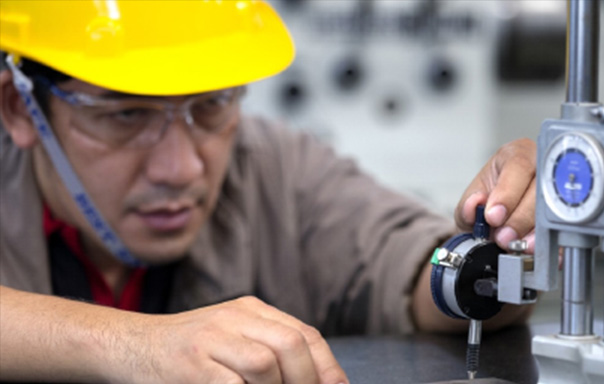
●Thickness Accuracy Control: Relying on high-precision rolling mills and AGC (Automatic Gauge Control) systems, thickness tolerances can be strictly controlled within the range of ±0.02mm to ±0.04mm, effectively avoiding stamping springback or cracking caused by uneven material thickness.
●Metallographic Structure Control: For composite components involving complex shearing and forming, the spheroidization rate and microstructural uniformity of the material directly determine its forming limit.
II. Typical Applications in Seat Adjustment Mechanisms and Door Lock Systems
Automotive safety components and seat systems have nearly rigorous evaluation standards for the dimensional stability and load-bearing limits of stamped parts:
●Seat Adjustment Mechanisms (such as recliner mechanism parts, height adjusters, etc.): Must withstand frequent alternating loads and huge impact forces at the moment of a collision. Using HC420LA can ensure no cracking occurs during complex bending and flanging processes, while meeting the high fatigue life requirements of the components.
● Door Lock Systems and Safety Systems (such as backrest locks, door strikers, seat lock tongues, seatbelt adjusters, etc.):These components often need to undergo fine blanking or continuous stamping composite processes. The application of high-strength steels such as HC700LA can significantly enhance the anti-shear and tensile performance of the locking mechanism without increasing the structural thickness, ensuring that vehicle doors do not open accidentally during side impacts or rollovers.
III. Stamping Formability and Process Challenges of High-Strength Steel
During the stamping process, high-strength steel (especially LA steel above the 700 MPa grade) is accompanied by a series of process difficulties, which must be overcome through advanced material control and die design:
3.1 Extreme Springback Control
Due to the high yield strength of high-strength steel and the large proportion of elastic deformation, the springback phenomenon after stamping is extremely significant.
●Coping Strategy: The high-quality mother coils provided by ALLOWORD undergo advanced stress-relief annealing and leveling unit (such as the PZ650 finishing unit) treatments to ensure high uniformity of strip flatness and internal stress, thereby reducing the dispersion of stamping springback at the source.
3.2 Forming Limit and Cracking Tendency
With the increase in strength grade (from HC420LA to HC700LA), the elongation after fracture of the material gradually decreases, and local necking or micro-cracks are prone to occur during deep drawing or large-curvature bending.
Process Assurance: The total amount of inclusions and the banding structure grade (≤grade 2) must be strictly controlled during production, combined with strict surface decarburization layer depth control (≤5μm), to ensure the plastic deformation capacity of the material under multi-axial stress states.
3.3 Trimming Edge Quality and Die Wear
High strength brings high hardness, which not only aggravates the wear of stamping dies but also easily generates micro-cracks at the sheared edges.
Solution: Base materials with excellent strength-toughness matching are selected, combined with high-precision slitting and edge treatment processes to ensure the trimming quality of incoming raw materials and extend the service life of customers' dies.
Ⅳ.ALLOWORD's Whole-Process Consistent Quality System and Technical Empowerment
As your companion commercial consultant and technical expert, ALLOWORD deeply understands that high-quality stamped parts depend not only on later die debugging, but more fundamentally on whole-process process control:
●Source Selection and Composition Fine-Tuning: Premium smelting base materials are carefully selected, and harmful elements (such as phosphorus P≤0.018%, sulfur S≤0.010%) are strictly controlled to ensure steel purity.
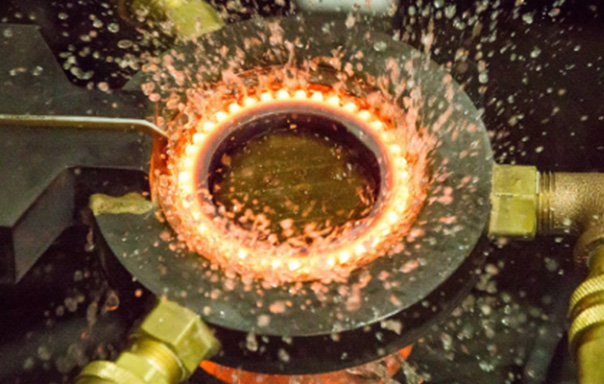
●Advanced Heat Treatment and Controlled Rolling/Cooling: Utilizing full-hydrogen bell-type annealing furnaces and high-precision reversible rolling mills to precisely regulate the material's microstructure, achieving high strength while maintaining good elongation.
●Comprehensive Technical Solution Provision: From material supply to underlying structural analysis and optimization, and stamping performance evaluation, ALLOWORD is committed to transforming from a mere material supplier into a co-creator of technical solutions, assisting customers in overcoming technical bottlenecks in the lightweight design and high formability of automotive safety components.
V. Conclusion
In today's automotive industry, which is comprehensively moving toward electrification and intelligence, the safety standards for seat adjustment mechanism and door lock system safety components are continuously escalating. Choosing high-quality HC420LA/HC700LA high-strength steel materials provided by ALLOWORD can not only perfectly balance the demands of lightweight design and high impact resistance, but also significantly improve customer production yield rates through superior dimensional tolerances and formability.
If you are looking for higher stability and higher technical standard high-strength special steel materials for a new generation of automotive safety structural parts, please feel free to contact us to obtain customized technical support and sample testing solutions.
Baoshan District,
Shanghai, China.