Daily press, 2025-11-07, 05:03 pm
Alloy Spring Steel: Properties, Grades & Processes
Springs often operate under alternating stress in daily use, with fatigue failure being the main form of damage. Therefore, the steel used for manufacturing springs must possess excellent mechanical properties, such as high yield point, high yield ratio, elastic limit, and superior fatigue resistance, ensuring the spring maintains sufficient elastic deformation capacity under heavy loads.
In addition, alloy spring steel must also have certain ductility and toughness, good hardenability, and stable chemical properties to avoid decarburization and overheating. For springs used in special applications—such as those working in high-temperature or corrosive environments, or requiring long-term elasticity—corresponding heat resistance and corrosion resistance are also necessary.
Although medium carbon steel and high carbon steel can also be used to make springs, their limited hardenability and strength restrict them to small springs with low stress. In contrast, alloy spring steel, with its outstanding performance, can easily meet the manufacturing requirements of large springs with high yield limits.
The carbon content in alloy spring steel is usually controlled between 0.5% and 0.7% to ensure the steel has high elasticity and strength.
Meanwhile, alloying elements such as silicon, manganese, and chromium are added to strengthen ferrite and improve hardenability and temper resistance. However, excessive silicon may cause surface decarburization of the steel during heating, while excessive manganese may lead to excessive grain growth.
Vanadium and molybdenum are added in appropriate amounts to refine grains, further improve strength and toughness, and enhance hardenability and temper resistance.
For large springs with a diameter or leaf spring thickness exceeding 10mm, hot forming is adopted at a temperature 50 to 80℃ higher than the normal quenching temperature. For small springs with a diameter or leaf spring thickness less than 8 to 10mm, cold-drawn spring steel wire is often used for cold coiling forming.
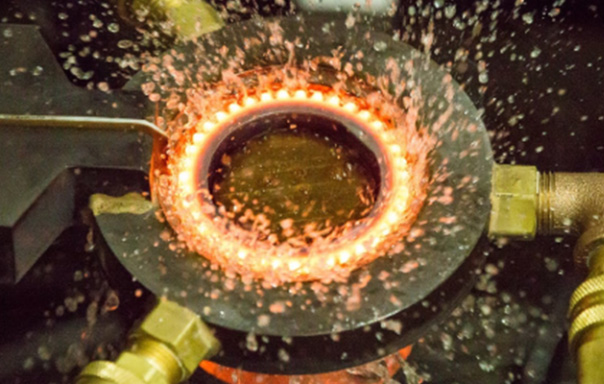
To ensure springs have both high strength and sufficient toughness, the process of quenching followed by medium-temperature tempering is commonly used. For hot-formed springs, quenching can be performed using the residual heat from the hot forming process. For cold-formed springs, the process can sometimes be simplified by omitting quenching and medium-temperature tempering, only requiring stress relief annealing at 200~300℃ after forming.
In addition, after heat treatment, spring steel undergoes shot peening to introduce residual compressive stress on the surface, thereby enhancing the fatigue strength of the spring. The hardness of spring steel treated in this way is maintained between 40~48HRC, which not only provides high elastic limit and fatigue strength but also retains a certain degree of ductility and toughness.
Related Reading