Daily press, 2025-12-02, 02:21 pm
Decoding Electrical Steel Sheet Materials
In the industrial system of the electrical age, there is a special material that provides crucial support for the power supply of modern civilization. Though ordinary in appearance, it is highly valuable and known as the "noble steel." From civil power supply to high-speed rail operations, numerous scenarios rely on this material—it is electrical steel, an indispensable key material in modern industry.
Electrical Steel is an ultra-low carbon alloy steel with a silicon content of 0.5%-4.5%. This seemingly ordinary sheet metal is actually the core component of electrical equipment. Its unique magnetic properties make it the optimal choice for manufacturing transformer cores and motor rotors. For every 1% increase in silicon content, the material's resistivity increases by approximately 4 times, a characteristic that effectively reduces eddy current losses during equipment operation.
In ultra-high voltage substations, the lamination thickness of electrical steel sheets is precisely controlled between 0.23-0.35mm, equivalent to the thickness of 5 A4 papers. The texture formed through special rolling processes enables a magnetic induction intensity of over 1.9T, meaning the material can carry greater magnetic flux in the same volume. It is the precise control of this microstructure that ensures more than 98% of the power grid's transmission efficiency.
Electrical steel production is hailed as the "jewel in the crown" of the metallurgical industry, requiring 18 key processes including steelmaking, hot rolling, normalizing, and cold rolling. Among these, the decarburization annealing process must be carried out in an 800℃ hydrogen-nitrogen mixed atmosphere for 5 minutes, controlling the carbon content in the material below 30ppm. The more precise HiB steel (High Magnetic Induction Oriented Electrical Steel) also undergoes laser scribing treatment to form micron-scale grooves on the material surface, reducing the magnetic domain width to less than 2mm.
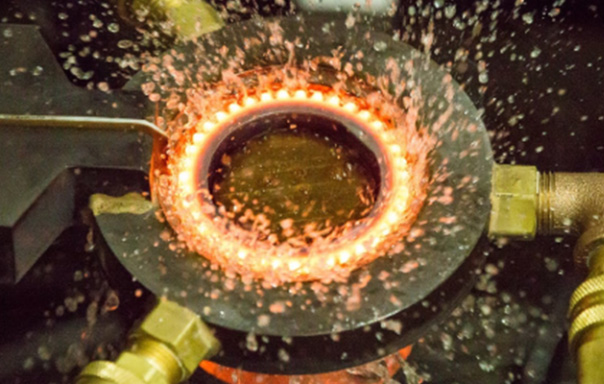
The shape control of the cold rolling process demands extremely high precision. A six-high rolling mill is required to reduce 3mm-thick hot-rolled sheets to 0.3mm with a thickness deviation not exceeding ±3μm. The continuous decarburization annealing line using electromagnetic induction heating can uniformly heat the steel strip to 830℃ at a speed of 20m/min, forming a stable secondary recrystallized structure. The stable control of this process directly determines the magnetic performance grade of the product.
In the new energy vehicle field, the market demand for electrical steel is experiencing explosive growth. Non-oriented electrical steel used in drive motors requires a magnetic induction B50 of over 1.7T and an iron loss P1.5/50 of less than 4.0W/kg. In the permanent magnet synchronous motor of Tesla Model 3, the stator core is made by laminating 0.25mm ultra-thin electrical steel sheets, enabling the motor efficiency to exceed 97% and the vehicle's driving range to increase by 8%.
The technological upgrading of wind power equipment further highlights the important value of electrical steel. The doubly-fed generators of 5MW offshore wind turbines require high-grade electrical steel with a thickness of 0.2mm, and its magnetostriction coefficient must be controlled below 3ppm to ensure stable operation under strong wind loads. The latest 10MW wind turbine developed by China Three Gorges Corporation has reduced the generator weight by 15% and increased annual power generation by 12 million kilowatt-hours through optimizing the lamination process of electrical steel sheets.
From traditional power systems to the new energy industry, electrical steel, with its excellent magnetic properties and precise manufacturing processes, has become the core material supporting industrial upgrading and energy transition. As the global demand for high efficiency, energy conservation, and green low-carbon development continues to grow, the application scenarios of electrical steel will expand further. Its importance in the modern industrial system will become increasingly prominent, providing a solid guarantee for the sustainable development of the global energy industry.
Related Reading