
In the world of global procurement and precision rolling, the Japanese Industrial Standards (JIS) are regarded as the benchmark for their meticulous classification and scientific naming conventions. However, mastering the basic codes is only the beginning. The true "soul" of a JIS grade often lies within its latest standard revisions and process-specific suffixes. This guide analyzes the JIS nomenclature to help engineers transition from "selecting a grade" to "mastering the process."
I. Free-Cutting Steels (SUM Series): The Foundation of High-Precision Machining
Governed by JIS G4804, the SUM series defines not just chemical composition, but the lifespan of the cutting edge and the final surface finish.
Designation Format: SUM + Two Digits + (L)
First Digit: Indicates the alloying category.
1: Resulfurized (e.g., SUM12).
2: Rephosphorized and resulfurized.
3/4: Medium-to-high carbon or manganese-sulfur combinations for balanced strength and machinability.
"L" Suffix: Indicates lead (Pb) added to maximize chip breakage.
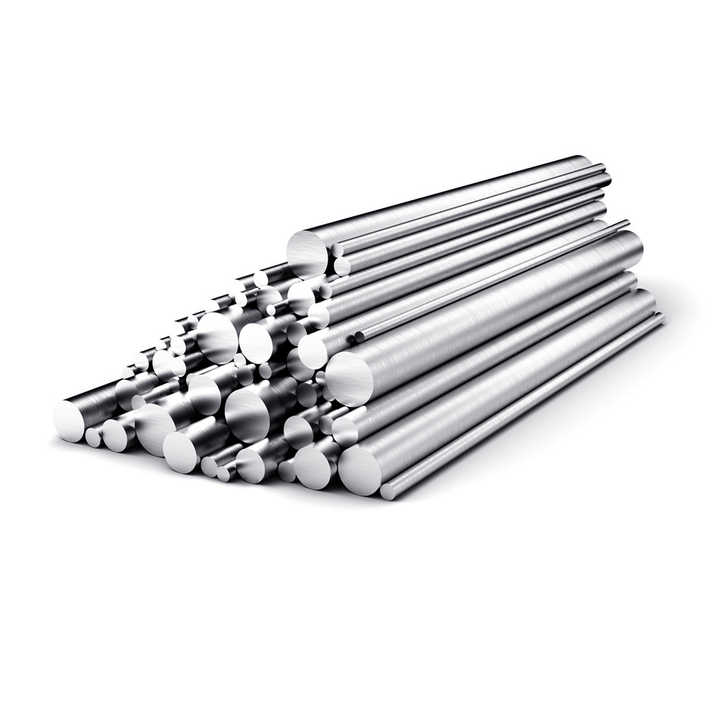
[ALLOWORD Strategy]: With global environmental mandates, we are seeing a shift from SUM24L toward lead-free or ultra-low-lead alternatives. By applying precision rolling, ALLOWORD provides SUM-series strips with superior straightness, meeting the rigorous demands of high-speed automatic lathes for continuous feeding.
II. Cold Heading Quality Steels (SWRCH Series): The Source of Precision Fasteners
Following JIS G3507, the designation logic here is directly tied to the complexity of the final component.
Designation Format: SWRCH + Carbon Content + Deoxidation Method
Carbon Content: The middle digits represent the average carbon content (e.g., "08" indicates 0.08%).
Deoxidation Markers:
A (Aluminum-killed): Offers superior formability and grain refinement—the gold standard for precision deep drawing and cold heading.
K (Killed): High purity, ideal for high-load bolts.
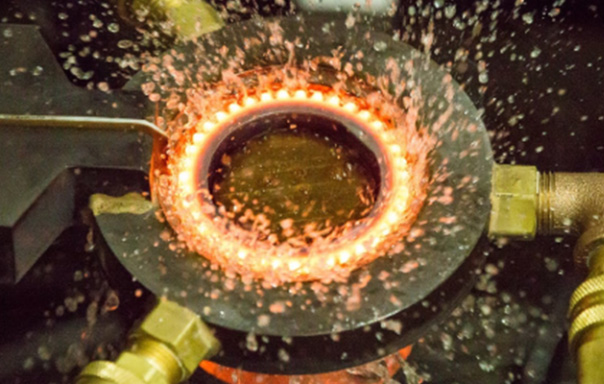
[Critical Detail]: The key to SWRCH is not just the grade, but the decarburization layer depth. ALLOWORD’s SWRCH strips are processed via hydrogen bell-type annealing to keep surface decarburization at an absolute minimum, ensuring uniform strength after cold heading.
III. Spring Steels (SUP) & Bearing Steels (SUJ)
Spring Steels (JIS G4801): SUP + Sequence Number + (A). Example: SUP10 (Chromium-Vanadium).
Technical Focus: JIS emphasizes fatigue life. Precision-rolled SUP strips are essential for clutch plates or precision diaphragms where tempering stability and low elastic relaxation are vital.
Bearing Steels (JIS G4805): SUJ + Sequence Number. The most common, SUJ2, is the global equivalent of GCr15 or 52100.
Standard Alert: The 2019 revision of JIS G4805 introduced stricter requirements for carbide uniformity, directly impacting noise levels in high-speed bearings.
IV. Tool Steels: SK / SKS / SKD
JIS divides tool steels into carbon and alloy types—the heart of precision dies and blades.
SK Series (Carbon Tool Steel): e.g., SK85 (formerly SK5). High carbon, high hardness potential, and excellent cost-efficiency.
SKS / SKD (Alloy/Die Steel):
SKS: Alloy tool steels for cutting or impact resistance.
SKD: Cold-work or hot-work die steels (e.g., SKD11 for extreme wear resistance).
[Precision Perspective]: When delivering SK precision strips, ALLOWORD focuses on Spheroidized Annealing (SA) quality. Only a Grade 3 or higher spheroidization ensures an exceptionally smooth sheared edge during precision stamping.
V. Stainless (SUS) & Heat-Resistant (SUH) Steels
SUS (Stainless Use Steel): Following JIS G4305.
Grades generally align with the U.S. 2xx/3xx/4xx series, but JIS offers finer control over micro-elements like Ti and Nb.
Suffixes: "L" (Extra-low carbon for intergranular corrosion resistance); "J1/J2" (Unique Japanese micro-alloyed variations).
SUH (Heat-resistant Steel): Specialized for engine valves or high-temperature exhaust systems.
VI. The Invisible Key: Finish & Hardness Suffixes
In precision rolling, the grade is only the starting point. ALLOWORD emphasizes the following suffixes for final delivery:
Hardness States:
A: Fully Annealed.
1/4H, 1/2H, H: Degree of work hardening. For precision springs, the Hardness (HV) tolerance window is often more critical than the chemical grade itself.
Surface Quality:
SD (Dull Finish): Matte surface, ideal for retaining lubricants during continuous stamping.
SB (Bright Finish): Mirror-like finish, essential for precision plating or high-aesthetic components.
Conclusion: The Power of Customization
JIS designations are the language of global manufacturing, but true competitive edge comes from "physical fine-tuning."
At ALLOWORD, we don't just deliver products that match a JIS code; we provide materials with a "Narrow Performance Window" achieved through 20-high precision rolling and customized heat treatment. Whether it is compressing the thickness tolerance of SPCC to ±0.005mm or managing the hardness fluctuation of SK85 within ±10HV, this deep interpretation of JIS standards is the future of precision manufacturing.
Baoshan District,
Shanghai, China.