
In the world of high-speed stamping, most manufacturers focus on two metrics: stroke speed and material grade. However, there is a "silent thief" in the production line that erodes margins without ever appearing as a direct line item on a balance sheet—Thickness Tolerance. While a few microns of deviation might seem negligible in a raw material quote, they manifest as catastrophic costs in a high-volume production environment.
I. The Domino Effect of Gauge Fluctuation
The physics of stamping is built on the assumption of consistency. When a high-speed press operates at 500+ strokes per minute, the clearance between the punch and the die is precisely engineered. If your alloy strip fluctuates beyond a tight tolerance—say, exceeding ±0.03mm instead of a precision ±0.01mm—the internal stress distribution changes instantly.
This inconsistency leads to unpredictable springback. A slightly thicker section of the coil will exhibit different elastic recovery than a thinner section, resulting in dimensional instability across a single batch. For precision components like automotive connectors or engine shims, this deviation translates directly into high scrap rates and secondary rework, killing your ROI before the product even leaves the factory floor.
II. Tooling Wear: The Expensive Consequence of Inconsistency
Precision dies are among the most significant capital investments in a stamping facility. Thickness inconsistency is the primary driver of premature tool wear and "die-crashing." When the material gauge is on the high side of the tolerance, it increases the forming force and friction within the tool.
This extra resistance generates heat, accelerating the degradation of carbide inserts and coatings. Frequent tool regrinding not only costs money but also forces the production line to stop. At ALLOWORD, we’ve calculated that by switching from standard commercial-grade tolerances to our ±0.01mm precision strips, clients can extend their tool life by up to 25%, significantly lowering the "cost-per-part" over the project lifecycle.
III. The Hidden Costs of Constant Calibration
In a modern automated facility, time is more than money—it is competitive advantage. If a material's thickness varies throughout the coil, operators are forced to perform "constant calibration."
Every time a press is stopped to adjust the shut height or the pressure of the nitrogen cylinders to compensate for material thickness, the effective OEE (Overall Equipment Effectiveness) drops. By providing a "stable input," ALLOWORD allows your machinery to run in a "set-and-forget" mode. The true profit of precision steel lies in its ability to enable unmanned, continuous production without the risk of jammed feeders or out-of-spec components.
IV. Strategic Sourcing: Looking Beyond the Price per Ton
The most dangerous procurement mistake is comparing steel quotes solely on the price per ton. A cheaper material with wider tolerances often hides a 10% to 15% increase in total manufacturing cost due to scrap, downtime, and shortened tool life.
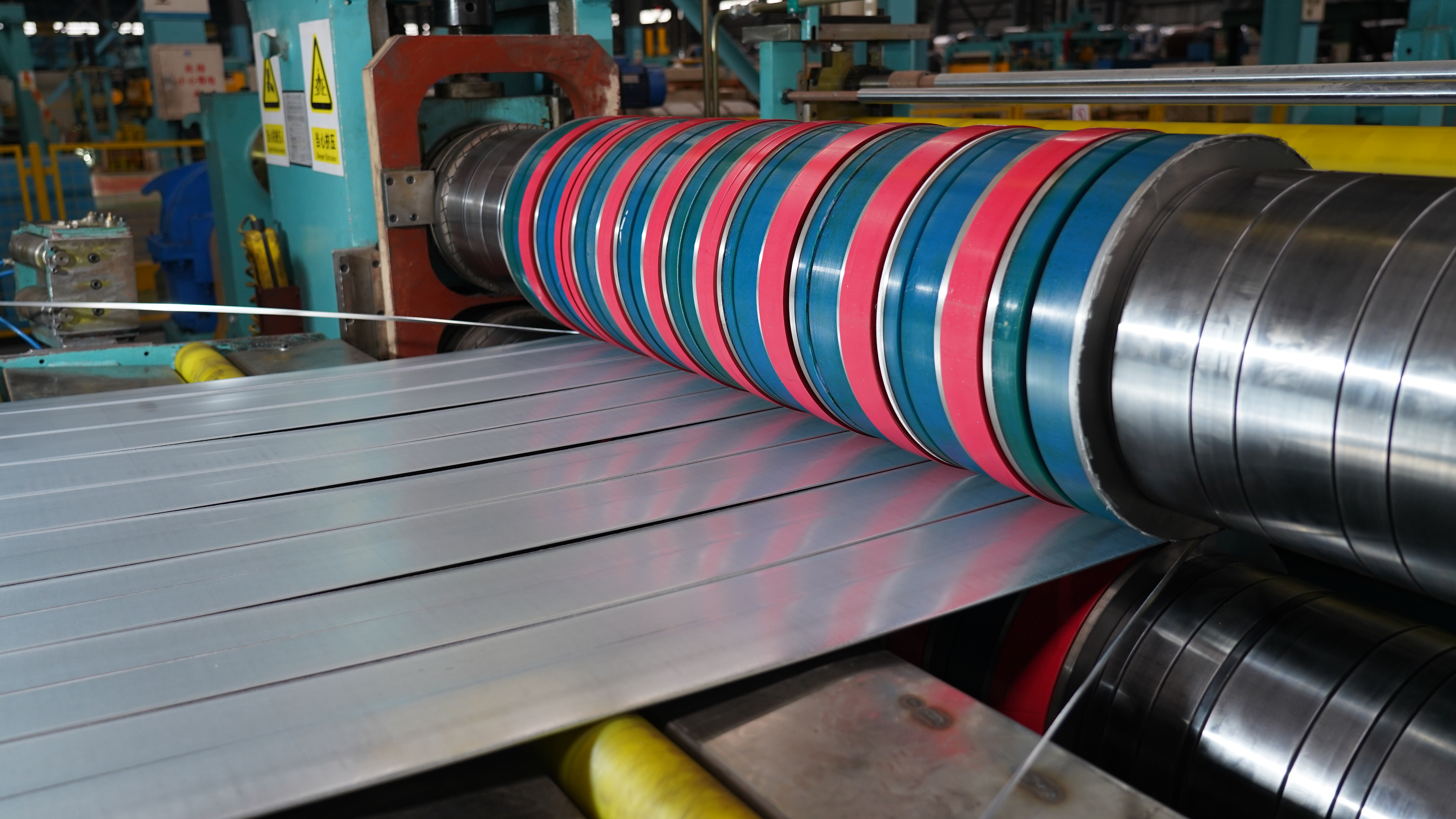
At ALLOWORD, our precision压延 (Cold Rolling) process is not just about making steel; it’s about providing a "predictable manufacturing variable." Whether you are processing 42CrMo4 or 50CrVA, our commitment to extreme gauge consistency ensures that your high-speed stamping lines reach their theoretical maximum efficiency.


Baoshan District,
Shanghai, China.