
For many steel traders, a Mill Test Certificate (MTC) is just a piece of paper required for customs clearance. But for ALLOWORD, an MTC is the "biological ID" of the material. In high-stakes industries like automotive safety or precision electronics, the ability to trace a failure back to a specific heat number or a rolling shift isn't just a requirement—it's a safeguard against catastrophic risk.
Here is what is truly hidden behind a professional MTC and why ALLOWORD’s traceability system sets us apart in the global market.
I. Beyond the Numbers: Decoding the Hidden Data
When you look at an ALLOWORD MTC, you see Chemical Composition and Mechanical Properties. But a professional engineer looks for the "Invisible Indicators":
1.Inclusion Ratings (Purity): Standard certificates might show "Sulphur" and "Phosphorus" levels. However, for high-fatigue applications, we provide data on non-metallic inclusions. This tells you if the steel is "clean" enough to survive millions of cycles without internal cracking.
2.Grain Size Uniformity: Strength is easy to achieve; consistency is hard. We document grain size to ensure that the material responds identically to your heat treatment and stamping processes across every single coil.
3.The Jominy Curve (For Alloy Steels): For carburizing steels like 17CrS3, we provide hardenability data. This ensures your quenching results are predictable, preventing expensive trial-and-error in your furnace.
II. The ALLOWORD "Digital Thread": From Melt to Port
Traceability at ALLOWORD means that for any 1.0mm strip delivered to your factory, we can travel back in time through its production life:
The Melting Source: We only partner with Tier-1 mills (like Baosteel). We track the Heat Number, ensuring the raw slab met our purity standards before rolling ever began.
The Rolling Log: Our system records the specific mill parameters—rolling temperature, speed, and AGC (Automatic Gauge Control) data. This is why we can guarantee a thickness tolerance of ±0.01mm.
The Slitting Record: When we cut a wide coil into narrow strips, each sub-coil is assigned a new unique ID linked to the parent coil. This prevents "material mixing," a common nightmare in large-scale manufacturing.
III. Why Traceability is Your Best Insurance Policy
In the rare event of a production defect, a broken traceability chain can stop your entire assembly line for weeks. With ALLOWORD’s system:
1.Rapid Root Cause Analysis: If a part cracks, we can instantly verify if the issue was a raw material deviation or a localized processing error.
2.Targeted Recalls: Instead of scrapping an entire month’s production, you can identify exactly which batch was affected, saving millions in potential waste.
3.Audit Readiness: Whether you are undergoing an IATF 16949 audit or a specialized customer inspection, ALLOWORD provides the transparent documentation that passes European and American quality standards with ease.
IV. The Human Element: Our Resident Engineers
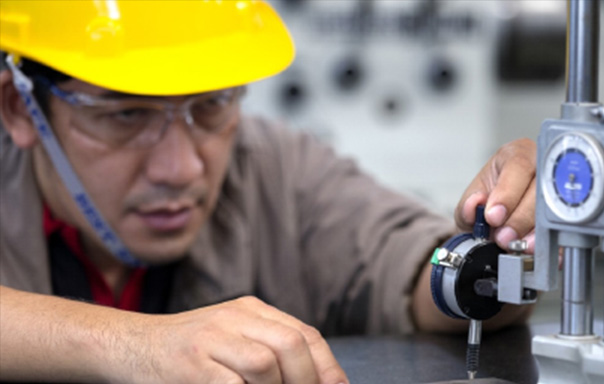
At ALLOWORD, traceability is not just an automated database. Our resident production engineers, like Kevin Chou, personally oversee the verification of test results before any material is cleared for export. We don't just pass along a mill's report; we validate it against our own precision standards.
Conclusion: Trust is Built on Data
In a world of "standard" steel, ALLOWORD offers Accountability. When you scan the QR code on an ALLOWORD coil, you aren't just seeing a grade; you are seeing the entire history of a precision-engineered material.
"We don’t just ship steel; we ship certainty."
Baoshan District,
Shanghai, China.