
In the practical application of spring steel strips, the metallurgical quality and heat-treatment condition of the material itself are often only half the battle. The matching of subsequent stamping and heat-treatment processes ultimately determines success or failure. Recently, we encountered and successfully resolved a wave washer failure case caused by an oversight in the customer's process, once again highlighting the irreplaceable role of "stress-relief annealing" as a critical link.
I. Premium Raw Materials: Precision Manufacturing of 51CrV4 +QT
The customer selected our high-strength spring steel strips strictly produced in accordance with the EN 10089:2002 standard, with a specification of 0.8mm, specifically designed for manufacturing wave washers.
To ensure this steel strip possessed exceptional fatigue resistance and elasticity after stamping, we invested meticulous effort into our front-end production:
●Cold-Rolling Stage: We adopted high reduction ratios and multi-pass spheroidizing annealing processes, making the distribution of carbides within the material extremely uniform.
●Heat-Treatment Stage: During the quenching and tempering phases, we innovatively introduced an austempering process, endowing the steel strip with outstanding toughness, fine-grained microstructure, and flawless elastic potential.
II. The Mystery: Why Did Washers Made from Premium Strips Fail?
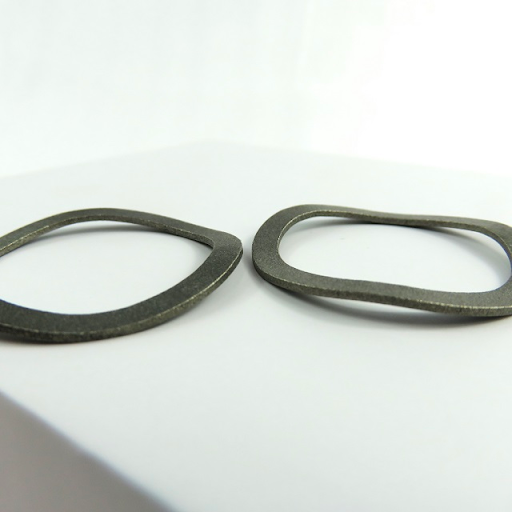
However, after using this high-quality steel strip via a direct stamping process to produce wave washers, the customer encountered a severe quality failure: when the washers were removed from the machine after running for a period of time, they lost their elasticity and failed to spring back to their original shape, resulting in sealing or fastening failure.
Faced with this unexpected situation, our technical team quickly assembled to conduct an in-depth investigation and failure analysis. After ruling out the possibilities of material composition, hardness, or structural defects, we discovered the true "culprit"—the customer had omitted a vital step immediately after stamping: stress-relief annealing.

III. Root Cause Analysis: Machining Stress and Residual Deformation
51CrV4 is a high-strength alloy spring steel. When 0.8mm-thick steel strips are directly stamped through molds into wave washers with complex three-dimensional curves, immense shear stress and plastic deformation stress are generated within the material.
●Consequences of Unreleased Stress: If these residual stresses are not eliminated through heat treatment, the "elastic energy" inside the washer remains in a highly unstable state. Under load or during disassembly, residual stresses trigger dislocation slips in the microstructures, causing permanent relaxation and rendering the product prone to reverting back to its original flat state (i.e., a loss of elastic deformation capacity).
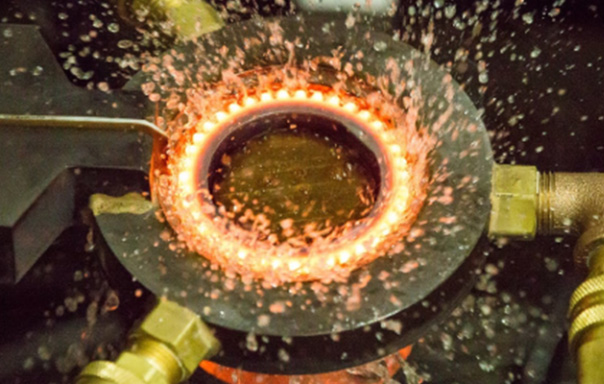
●Standard Solution: For such high-strength spring-stamped parts, stress-relief annealing must be performed after forming (typically controlled at 300°C ~ 350°C, holding for 1 ~ 2 hours). This process gently eliminates internal stresses caused by cold deformation, completely "locking in" the material's elastic limit and geometry.
IV. Breakthrough and Mass Production: Process Synergy for Flawless Delivery
Upon identifying the root cause of the failure, we assisted the customer in making urgent adjustments to their outsourced heat-treatment process, strictly adding the post-stamping 300°C ~ 350°C stress-relief annealing step.
Tested on machines, the adjusted products exhibited perfect elasticity and spring-back performance, completely resolving the failure issue. Currently, this 51CrV4 wave washer project has smoothly transitioned into full-scale mass production.
This case offers a profound industry insight: the value of high-end specialty steel lies not only in the "hard indicators" at the time of delivery from the steel mill, but also in the process closed-loop of the entire supply chain—from rolling, heat treatment, and stamping to final stress relief. Only by perfectly combining advanced material genes with standardized post-processing can we truly deliver zero-defect, reliable quality to global clients.
Baoshan District,
Shanghai, China.