
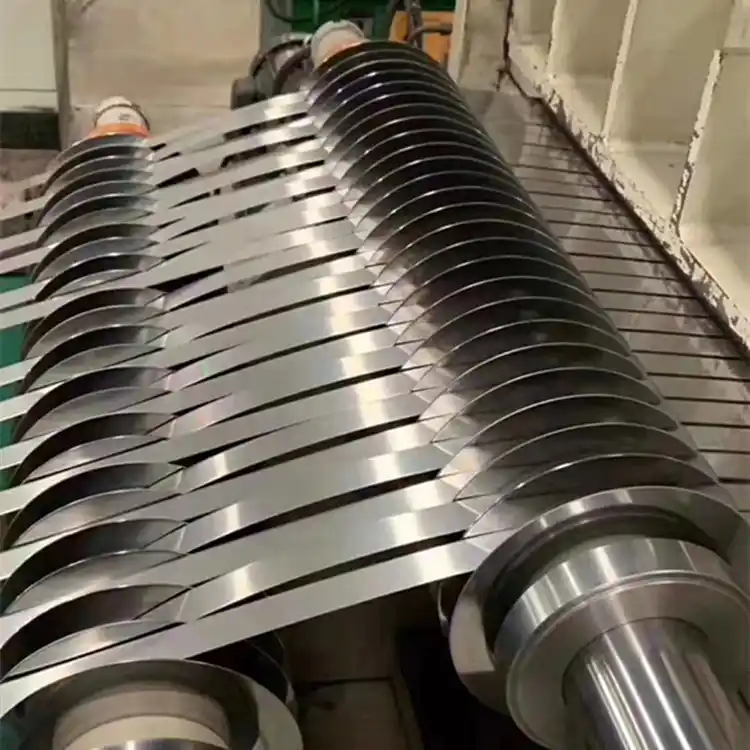
In the production and delivery of high-end martensitic stainless steel, relying solely on literal strength indicators often leads to common misconceptions. Recently, we received a highly representative, high-standard inquiry: 1.4021 material (equivalent to domestic 20Cr13), with specifications of 4.0mm thickness × 130mm width × coil (C), a thickness tolerance of ±0.03mm, a required quantity of 3 tons, full compliance with the EN10088 standard, and a specified delivery condition of +QT650.
For specialty steel requirements featuring such explicit mechanical metrics, the industry frequently faces a core technical dilemma: should the target hardness be achieved directly through cold-rolling work hardening, or is it mandatory to follow the quenching and tempering (Q&T) route?
I. Misconception Analysis: Cold-Rolling Work Hardening vs. True Q&T Condition
Judging purely by surface hardness or strength values, some manufacturers might attempt to directly "work-harden" the material to the target strength using a high cold-rolling reduction ratio. However, this approach has fatal flaws:
●The Limitations of Cold-Rolling Hardening: Enhancing strength solely via cold rolling causes massive internal processing stress to accumulate within the material, leading to a drastic drop in plasticity indices (such as elongation). The steel becomes exceptionally brittle and hard, completely failing to meet the requirements for subsequent stamping, bending, or complex machining.
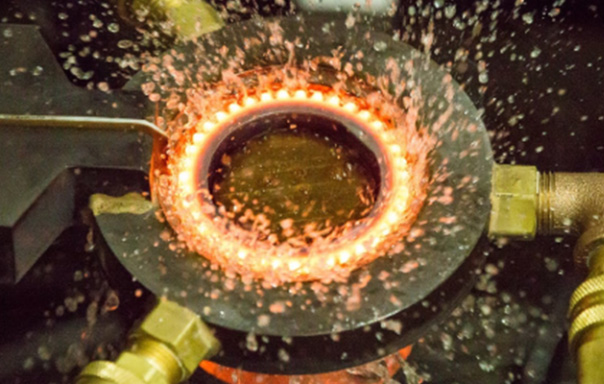
●Our Technical Ceiling: By contrast, we possess robust internal heat-treatment capabilities, with our full-line Q&T processes capable of achieving maximum tensile strengths of up to 1750 MPa. However, this does not mean all target strengths can or should be solved simply by "hard-rolling."
II. Decoding QT650 and QT750: The Precise Balance of Tensile Strength and Elongation
For the +QT650 condition requested by the client, the standard technical specifications involve much more than just meeting a tensile strength threshold—they demand a strict property range and exceptional plasticity:
1.Tensile Strength Range: Must be precisely controlled within the golden window of 650 to 850 MPa.
2.Strict Elongation Metric: The elongation rate must reach over 12%.
Similarly, for higher grades like +QT750, the underlying principle is identical—martensitic stainless steel can only secure a superior elongation rate of over 12% while simultaneously achieving high tensile strength (650 MPa or 750 MPa and above) through standardized "quenching + high/medium-temperature tempering" heat-treatment processes. Through microstructural transformation, this process releases stress and refines grains. This "high strength without brittleness" toughness is something cold rolling alone can never achieve.
III. Our Comprehensive Delivery Assurance
Faced with the demanding combination of a 4.0mm thickness, an ultra-tight tolerance of ±0.03mm, and comprehensive mechanical properties like QT650, we leverage the core strength of our "advanced rolling equipment + independent Q&T production lines." We achieve complete, flawless control over everything from dimensional precision to microstructural properties, ensuring that every 3-ton batch delivered meets world-class standards in compliance, strength, and ductility.


Baoshan District,
Shanghai, China.